top of page
Sign Up
Up
Return to Hub
Technician
Resources
View All
Phase 1
Phase 2
Phase 3
Phase 4
Phase 5
Watch the latest
Play Video
Facebook
Twitter
Pinterest
Tumblr
Copy Link
Link Copied
Flow and Pressure in Pipes Explained
What affects how liquids flow through pipes? Engineers use equations to understand pressure and flow rates, helping them design pipe systems that deliver the required flow with minimal pressure loss.
BASICS: Refrigeration Cycle
Pneumatic Cylinder: How Does It Work?
Featured Topic:
Core Safety Principles
The Fundamentals of Electrical Safety —
Critical Knowledge for Working Safely
Ground neutral and hot wires explained. In this video we look at the difference and purpose of the ground wire, the hot wire and the neutral wire in a north american residential electrical system. We look at ground faults, GFCI, current, voltage and simple examples for each.
P1 Videos
Phase 1 Resources:
Safety and Field Readiness
Build the essential safety habits, professional standards, and technical awareness needed to advance in the program.
Phase 1 Overview
Play Video
Play Video
04:18
HVAC/R Condenser Basics
Bryan covers HVAC/R condenser basics. He gives a basic overview of the HVAC/R condenser and what it does in air conditioning and refrigeration systems. A condenser rejects heat from the refrigerant, making it the opposite of the evaporator. The condenser does three different things in three phases. First, the condenser desuperheats the refrigerant, bringing it down to the condensing temperature (where it can change state). Then, the middle of the condenser is where the refrigerant actually turns from a vapor to a liquid. The last few rows of the condenser are where subcooling occurs, which is when the liquid refrigerant's temperature drops below the saturation (condensing) temperature. To accomplish all three of those functions, the condenser rejects its heat to another substance, typically air. (However, there are some systems that reject heat to liquids like water and glycol via heat exchangers.) Regardless of where the rejected heat is going, the main goal is to get the heat out of the refrigerant and to something else. Whatever that "something else" is, it must have a lower temperature than the refrigerant. Otherwise, heat transfer can't occur because heat moves from areas with higher temperatures to lower temperatures. That "something else" must also have a temperature below the condensing temperature. Many condensers are piped so that the refrigerant enters the condenser from the top and makes its way down (subcooling at the bottom). Read all the tech tips, take the quizzes, and find our handy calculators at https://www.hvacrschool.com/
Play Video
Play Video
05:42
How To Use a MULTIMETER (Volts, Amps, Ohms, Continuity)
This is a very quick version of a longer video I did on this topic a couple years ago. This is how to use an electrician's multimeter (tester) in around 5 minutes. You can watch the full version of this video here: https://youtu.be/GNrSiSmB2DU 🤘⚡️EU Learning System⚡️🤘 For Individuals --- https://electricianu.com/learning-system-for-individuals/ For Businesses --- https://electricianu.com/learning-system-for-businesses/ -Video courses on every side of the electrical trade (theory, code, safety, wiring, install, troubleshooting, leadership, and more) -Practice exams for 2017, 2020, 2023 code -YouTube videos categorized and searchable -Audio lessons -Forum -Business version has admin portal and ability to assign learning to technicians and monitor progress -Any business size from 2 techs to 2,000! 🎓💡CONTINUING EDUCATION💡🎓 Sign up here --- https://electricianu.com/continuing-education/ -State Approved -Video Based ✍📝PRACTICE EXAMS📝✍ Get them here --- https://www.electricianu.com/electrician-u-membership/ -2017, 2020, and 2023 NEC versions -Online Residential Wireman Exam -Online Journeyman Exam -Online Master Exam -300 Question Online Code Cannon (not license specific, all code) -Take as many times as you want -All of the above come with printable PDFs 🎤🎧PODCAST🎧🎤 Spotify: https://open.spotify.com/show/7ldCwdxhWnT0R3nne96XjC?si=a42a98b83c3549fc&nd=1 Apple Podcast: https://podcasts.apple.com/us/podcast/electrician-u/id1583270265 📱👍SOCIALS👍📱 TikTok - https://www.tiktok.com/@electricianu Instagram - https://www.instagram.com/electrician_u/ Facebook - https://www.facebook.com/TheElectricianU/ Reddit - https://www.reddit.com/r/ElectricianU/ Rumble - https://rumble.com/c/ElectricianU Discord - https://www.discord.gg/electricianu 🎧🎹Music, Editing, and Videography by Drake Descant and Rob LeBlanc🎹🎧 #electrician #electrical #electricity Many up-and-coming electricians have trouble understanding how to use the various electrical testers out on the market. All of the dials, characters, and options can get a bit confusing if you don’t have experience using a multi-meter. In this episode, I talk about how to use a commonly used tester, the Fluke T5-600. Technically the fluke T5 is not a “multi-meter.” Fluke’s website lists it as a “tester,” while their Multimeter section shows only digital multimeters with no separate jaw-type ammeter. However, a multi-meter is simply a “multi-use meter” - something that can test several different electrical units of measure. The T5 measures voltage, amperage, resistance, and continuity. There are other multi-meters out there that have extra functions but the T5 is for the basic 4 that most electricians will use every day. So how do we use it? VOLTAGE - What you’re doing when you’re testing for voltage is testing the difference of potential between two points. “Voltage” is a difference of potential between two points in an electrical system. It is not a reading of one conductor, it's reading a difference between two. It can even be a difference between one wire and a piece of metal that’s bonded to earth. But keep in mind that you’re trying to get a value that shows “the difference in potential” between TWO things. Flip the dial of the T5 to the “V” and take the leads out of the slide-in slots on the back. Ensure that you’re wearing proper PPE such as insulated “hot-gloves,” and a flash suit if you’re working in an electrical panel. Take one lead and touch it to a known hot conductor or terminal. Take the other lead and touch it to that same conductor or terminal. Notice you get a reading of 0v. This is because this conductor is at the same potential as itself. To get a voltage reading you have to test between two different objects. AMPERAGE - How to use the amperage setting - Flip the dial to the “A” (Amperes). Line your wire up with the two lines inside of the jaw of the ammeter. Only measure one wire at a time. This tester will give you readings up to 100 amps, so for anything more than that you’ll need a larger tester. This makes sense since the max size wire you can fit in the ammeter is 1/0 THHN. If you have larger wires than 1/0 THHN then you’ll need to get your hands on a clamp-on ammeter. RESISTANCE - Flip the dial to the Ohm (Omega) symbol. For this you want to test on a dead circuit so make sure the power is shut off. To test a conductor’s resistance you will need to have access to the beginning and the end of the conductor. Put one lead on the beginning of your conductor and one lead and the end of your conductor. This meter will display how many ohms of resistance there is between the leads. When there is low resistance you will hear a loud toning noise. When you try testing a really high resistance the tester will stop emitting a tone, and will instead just display values. This meter is only good for up to 1,000 ohms. Anything more than 1,000 ohms should really be tested with a megger (megohmmeter)
Play Video
Play Video
07:31
How Solenoid Valves Work - Basics actuator control valve working principle
How do solenoid valves work? We look at how it works as well as where we use solenoid valves, why we use solenoid valves and what they look like. We look inside the simplified valve to understand the working principle of how a solenoid vale works. LEARN MORE HERE: https://theengineeringmindset.com/how-solenoid-valves-work/ Sign up for our FREE engineers newsletter for updates, competitions, news and offers 🎁 Link: http://engmind.info/Engineers-Report 🏆 Download Magnetic Tool for free - http://bit.ly/DownloadMagneticTool1 The Magnetic Tool app, part of the Danfoss CoolApps Toolbox, makes testing a solenoid valve coil quick and easy and is available globally for Android and iPhone. Download Magnetic Tool for free - http://bit.ly/DownloadMagneticTool1 Get this book ➡️ http://hvacr.life/Best-HVACR-Book Get this tool ➡️ http://hvacr.life/HVAC-Multimeter CORRECTION: 6:46 Video states the direction of current determines whether the valve is NO/NC. This is an error, the internal mechanical design is what determines whether the valve is NO/NC. See example: https://youtu.be/BbmocfETTFo?t=495 👋 SOCIALISE WITH US 👋 ******************************* 👉FACEBOOK: https://facebook.com/theengineeringmindset/ 👉TWITTER: https://twitter.com/TheEngMindset 👉INSTAGRAM: https://instagram.com/engineeringmindset/ 👉WEBSITE: Http://TheEngineeringMindset.com 🙌 SUPPORT US 🙌 ******************************* ⚠️ *Found this video super useful?* Buy Paul a coffee to say thanks: ☕ PayPal: https://www.paypal.me/TheEngineerinMindset 👀 Links - MUST WATCH!! 👀 ******************************* ⚡ELECTRICAL ENGINEERING⚡ 👉How electricity works: https://youtu.be/mc979OhitAg 👉Three Phase Electricity: https://youtu.be/4oRT7PoXSS0 👉How Inverters work: https://youtu.be/ln9VZIL8rVs 👉How TRANSFORMER works: https://youtu.be/UchitHGF4n8 👉How 3 Phase electricity works: https://youtu.be/4oRT7PoXSS0 👉How Induction motor works: https://youtu.be/N7TZ4gm3aUg 👉What is a KWH: https://youtu.be/SMPhh8gT_1E 👉How induction motor works: https://youtu.be/N7TZ4gm3aUg ❄️ CHILLER ENGINEERING ❄️ 👉Chiller Efficiency improvements: https://youtu.be/8x3MiO5XjhY 👉Chilled water schematics: https://youtu.be/ak51DHAiuWo 👉Chiller crash course: https://youtu.be/K0xAKzdROEg 👉Chiller types: https://youtu.be/gYcNDT1d30k 👉Chillers/AHU/RTU: https://youtu.be/UmWWZdJR1hQ 👉Water cooled chiller Part1: https://youtu.be/0rzQhSXVq60 👉Water cooled chiller Part2: https://youtu.be/3ZpE3vCjNqM 👉Water cooled chiller advanced: https://youtu.be/QlKSGDgqGF0 👉Air cooled chiller: https://youtu.be/0R84hLprO5s 👉Absorption Chiller : https://youtu.be/Ic5a9E2ykjo 👉Chiller/Cooling tower/AHU: https://youtu.be/1cvFlBLo4u0 👉Chiller flow rate: https://youtu.be/tA1_V6-dThM 👉Chiller fault troubleshooting: https://youtu.be/Zu0LVVNNVSw 👉Chiller COP calculation: https://youtu.be/h5ILlZ8nyHE 👉Chiller cooling capacity calcs: https://youtu.be/BZxXIdxVKeY 👉Chiller compressors: https://youtu.be/7Bah__spkTY 👉Chiller expansion valve: https://youtu.be/dXiV5YzTZQ4 👉Chiller surge: https://youtu.be/DQK_-vxObiw 👉Chiller condenser: https://youtu.be/p5uuPsyqnwU 👉Chiller evaporator: https://youtu.be/W3w7FpX9j9k 🌡️ HVAC ENGINEERING 🌡️ 👉HVAC Basics: https://youtu.be/klggop60vlM 👉Boilers/AHU/FCU: https://youtu.be/lDeuIQ4VeWk 👉How Heat Pump works: https://youtu.be/G53tTKoakcY 👉Heat pumps advanced: https://youtu.be/G53tTKoakcY 👉Fan Coil Units: https://youtu.be/MqM-U8bftCI 👉VAV Systems: https://youtu.be/HBmOyeWtpHg 👉CAV Systems: https://youtu.be/XgQ3v6lvoZQ 👉VRF Units: https://youtu.be/hzFOCuAho_4 👉Cooling load calculations: https://youtu.be/0gv2tJf7nwo 👉Pulley belt calculations: https://youtu.be/yxCBhD9nguw 👉Pump calculations: https://youtu.be/99vikjRrlgo 👉Fan and motor calculations: https://youtu.be/rl-HQRzL-kg 👉HVAC Cooling coils: https://youtu.be/oSs-4Ptcfhk 👉Cooling towers: https://youtu.be/UzHJWNL2OtM ⚗️ REFRIGERATION SYSTEMS 🌡️ 👉How refrigerants work: https://youtu.be/lMqoKLli0Y4 👉Thermal expansion valves: https://youtu.be/oSLOHCOw3yg 👉Refrigeration design software: https://youtu.be/QqP5aY6liAg 👉Design refrigeration system: https://youtu.be/TPabv9iDENc 👉Reversing valve: https://youtu.be/r8n1_6qmsKQ 👉How A/C units work: https://youtu.be/Uv3GfEQhtPE ⚗️ REFRIGERANTS ⚗️ 👉Refrierant retrofit guide: https://youtu.be/1OqgLcU2buQ 👉Refrigerant types, future: https://youtu.be/J77a0keM2Yk 👉How refrigerants work: https://youtu.be/lMqoKLli0Y4 🌊 HYDRONICS 🌊 👉Primary & Secondary system: https://youtu.be/KU_AypZ-BnU 👉Pumps: https://youtu.be/TxqPAPg4nb4 👉Pump calculations: https://youtu.be/99vikjRrlgo 🔥➡️❄️ HEAT EXCHANGERS 🔥➡️❄️ 👉Plate Heat Exchangers: https://youtu.be/br3gkrXTmdY 👉Micro plate heat exchanger: https://youtu.be/xrsbujk4u6k 💻 DATA CENTERS 💻 👉Data Center cooling: https://youtu.be/xBxyhxmhigc 🔬 PHYSICS 🔬 👉What is Density: https://youtu.be/r0Ej0xB-0C8 control valve automation actuator working principle industrial engineering danfoss process engineering technician #HVAC #refrigeration #engineering
Play Video
Play Video
04:17
What are some common metric unit prefixes? (nano, micro, milli, centi, kilo, mega, giga)
© The Maths Studio (themathsstudio.net) A short discussion about the common metric prefixes in use including nano (n), micro (μ), milli (m), centi (c), kilo (k), mega (M) and giga (G).
Play Video
Play Video
01:36
Check valve working animation
Check valves are generally installed in pipelines to prevent backflow. A check valve is basically a one-way valve, in which the flow can run freely one way, but if the flow turns the valve will close to protect the piping, other valves, pumps etc. If the flow turns and no check valve is installed, water hammer can occur. Water hammer often occur with an extreme force and will easily damage a pipeline or components. Check valves are used in many different applications. For example they are often placed on the outlet side of a pump, to protect the pump from backflow. Centrifugal pumps, the most common type of water pumps, are not self-priming, and therefore check valves are essential for keeping water in the pipes. Also, check valves are very often used in HVAC-systems (Heating, Ventilating and Air Conditioning-systems). HVAC-systems are e.g. used in large buildings, where a coolant is pumped many storeys up. The check valves are here installed to make sure that the coolant is not flushing back down. Thanks for Integral Process Controls India Private Limited for video For more information please visit their website www.integralinfo.net
Play Video
Play Video
04:07
Pressure Relief Valves (Types and Working Principle)
Pressure relief valve is one of the most important type of safety valves. This type of valves sets a limit on the rise of pressure within a hydraulic line. In normal operation the valve is closed and no fluid passes through. But if the pressure in the line exceeds the limit the valve opens to relieve the pressure. This protects expensive machinery such as motors, pumps and actuators from becoming damaged from high pressure. Without a relief valve the pressure can continue to grow until another component fails and pressure is released. Two Types of Pressure Relief Valves are there. Direct Acting: A direct-acting valve may consist of a poppet or ball, held exposed to system pressure on one side and opposed by a spring of pre-set force on the other. This pre-set force is commonly achieved with an adjusting screw acting on the spring. By turning the screw in or out, the operator compresses or decompresses the spring respectively. The valve can be set to open at any pressure within a desired range. In a normally closed relief valve, the force exerted by the compression spring exceeds the force exerted by system pressure acting on the ball or poppet. The spring holds the ball or poppet tightly seated. When system pressure begins to exceed the setting of the valve spring, the fluid pushes the ball or poppet, allowing a controlled amount of fluid to bypass to the reservoir, maintaining system pressure at the valve setting. The spring re-seats the ball or poppet when enough fluid is released to drop system pressure below the setting of the valve spring. The pressure at which a relief valve first opens to allow fluid to flow through is known as cracking pressure. When the valve is bypassing its full rated flow, it is in a state of full-flow pressure. The difference between full-flow and cracking pressure is sometimes known as pressure differential, also known as pressure override. These valves are generally used for small flows. They don’t leak below cracking pressure and respond rapidly, making them ideal for relieving shock pressures. The differential between cracking and full open pressure on direct acting relief valves is high. For this reason, they are not recommended for precise pressure control. Pilot Operated: The pressure is supplied from the upstream side (the system being protected) to the dome often by a small pilot tube. The downstream side is the pipe or open air where the valve directs its exhaust. The outlet pipe is typically larger than the inlet. The upstream pressure tries to push the piston open but it is opposed by that same pressure because the pressure is routed around to the dome above the piston. The area of the piston on which fluid force is acting is larger in the dome than it is on the upstream side; the result is a larger force on the dome side than the upstream side. This produces a net sealing force. The pressure from the pilot tube to the dome is routed through the actual control pilot valve. The pressure at which the control pilot relieves at is the functional set pressure of the relief valve. When the pilot valve reaches set pressure it opens and releases the pressure from the dome. The piston is then free to open and the main valve exhausts the system fluid. The control pilot opens either to the main valve exhaust pipe or to atmosphere. The pilot is designed to open gradually, so that less of the system fluid is lost during each relief event. The piston lifts in proportion to the over-pressure. Blowdown is typically short. This figure shows a Comparison of action of relief valves at cracking and full flow pressure. Because pilot operated relief valves do not start opening until the system reaches 90% of full pressure, less fluid is released. These valves are best suited for high-pressure, high-volume applications. Although their operation is slower than that of direct-acting relief valves, pilot-operated relief valves maintain a system at a more constant pressure while relieving.
Play Video
Play Video
08:12
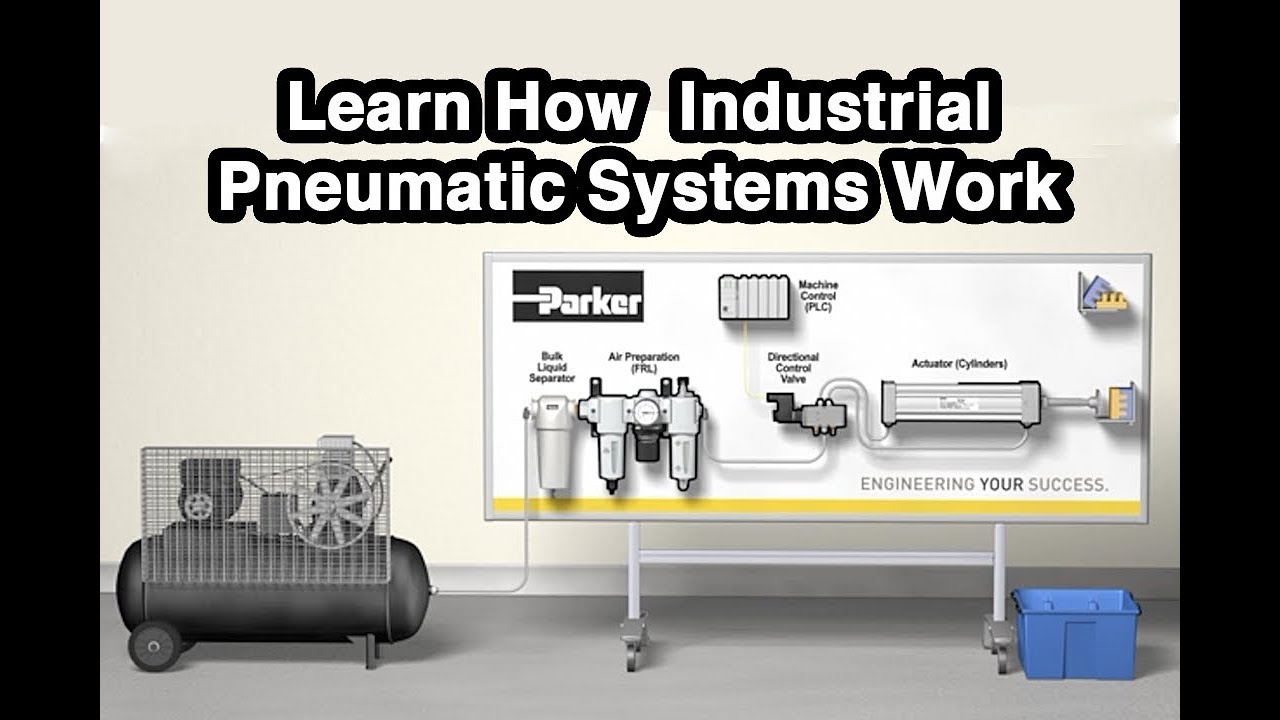
How a Industrial Pneumatic Systems Works And The Five Most Common Elements Used
A pneumatic system is a collection of interconnected components using compressed air to do work for automated equipment. Examples can be found in industrial manufacturing, a home garage or a dentist office. This work is produced in the form of linear or rotary motion. The compressed air or pressurized gas is usually filtered and dried to protect the cylinders, actuators, tools and bladders performing the work. Some applications require a lubrication device that adds an oil mist to the closed pressurized system. In this video, you will learn about the typical overall system components and how they are used together. Video Credit: Parker Hannfin RG Group 650 North State Street York, PA 17403 https://www.rg-group.com/
Play Video
Play Video
03:00
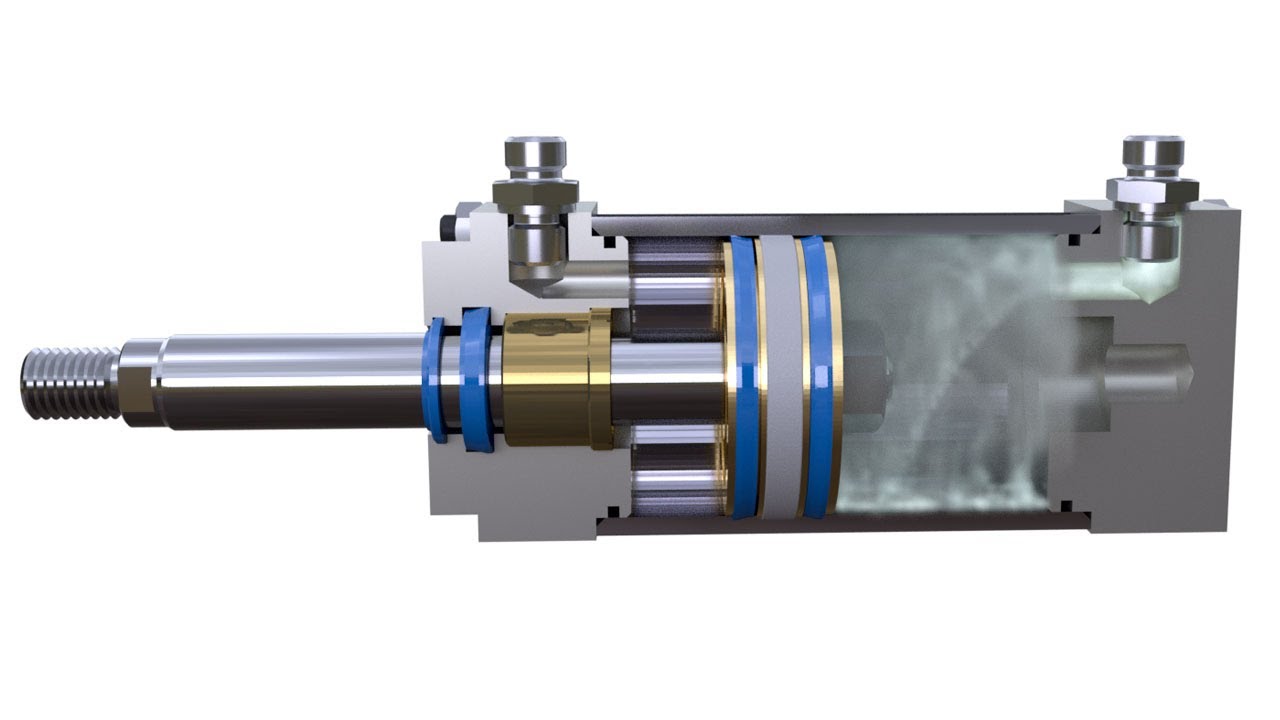
Pneumatic Cylinder: How Does It Work?
A pneumatic cylinder is a device which use the power of compressed gas to produce a force in a reciprocating linear motion. That device consist of a piston, rod, caps, cylinder tube, seals. How does a pneumatic cylinder work?
Phase 2 Resources:
Electrical & Controls Fundamentals
Develop core electrical and controls knowledge while taking the lead on SLAM, LOTO, and hands-on tasks.
Phase 2 Overview
P2 Videos
Play Video
Play Video
15:34
How Electric Motors Work - 3 phase AC induction motors ac motor
How Electric Motor Works - 3 phase induction motor AC alternating current. 🎁 Sign up for a Free Trial at ➡️ https://greatcourses.thld.co/engineeringmindsetjan Learn from the basics how an electric motor works, where they are used, why they are used, the main parts, the electrical wiring connections, induction motor, alternating current AC, electrical machines, rotating magnetic field, star delta, wye delta. ⚡🛠️ TOOLS YOU NEED 🛠️⚡ ******************************* Get this electronics book ➡️ https://amzn.to/41cCJPk Professional Multimeter -➡️ https://amzn.to/3xu2Vaw Good multimeter -➡️ https://amzn.to/3xrbuTd Professional clamp meter ➡️ https://amzn.to/4140FnK Good Clamp meter ➡️ https://amzn.to/3xqt2is Outlet tester ➡️- https://amzn.to/3kavg2l Energy monitoring plug ➡️ https://amzn.to/3SkfPl7 Battery tester -➡️ https://amzn.to/3S3fHWI Basic electronics ➡️ kit https://amzn.to/3xuLiqS DC Motor explained:👉 https://youtu.be/GQatiB-JHdI Alternators:👉 https://youtu.be/jdSKlg80DjU Star Delta starter:👉 https://youtu.be/h89TTwlNnpY Variable frequency drive:👉 https://youtu.be/yEPe7RDtkgo Power inverter:👉 https://youtu.be/iIqhAX0I7lI Relays:👉 https://youtu.be/n594CkrP6xE 👋 SOCIALISE WITH US 👋 ******************************* 👉FACEBOOK: https://facebook.com/theengineeringmindset/ 👉TWITTER: https://twitter.com/TheEngMindset 👉INSTAGRAM: https://instagram.com/engineeringmindset/ 👉WEBSITE: http://TheEngineeringMindset.com 👀 Links - MUST WATCH!! 👀 ******************************* ⚡ELECTRICAL ENGINEERING⚡ 👉How electricity works: https://youtu.be/mc979OhitAg 👉Three Phase Electricity: https://youtu.be/4oRT7PoXSS0 👉How Inverters work: https://youtu.be/ln9VZIL8rVs 👉How TRANSFORMER works: https://youtu.be/UchitHGF4n8 👉How 3 Phase electricity works: https://youtu.be/4oRT7PoXSS0 👉How Induction motor works: https://youtu.be/N7TZ4gm3aUg 👉What is a KWH: https://youtu.be/SMPhh8gT_1E 👉How induction motor works: https://youtu.be/N7TZ4gm3aUg ❄️ CHILLER ENGINEERING ❄️ 👉Chiller Efficiency improvements: https://youtu.be/8x3MiO5XjhY 👉Chilled water schematics: https://youtu.be/ak51DHAiuWo 👉Chiller crash course: https://youtu.be/K0xAKzdROEg 👉Chiller types: https://youtu.be/gYcNDT1d30k 👉Chillers/AHU/RTU: https://youtu.be/UmWWZdJR1hQ 👉Water cooled chiller Part1: https://youtu.be/0rzQhSXVq60 👉Water cooled chiller Part2: https://youtu.be/3ZpE3vCjNqM 👉Chiller/Cooling tower/AHU: https://youtu.be/1cvFlBLo4u0 👉Chiller flow rate: https://youtu.be/tA1_V6-dThM 👉Chiller fault troubleshooting: https://youtu.be/Zu0LVVNNVSw 👉Chiller COP calculation: https://youtu.be/h5ILlZ8nyHE 👉Chiller cooling capacity calcs: https://youtu.be/BZxXIdxVKeY 👉Chiller compressors: https://youtu.be/7Bah__spkTY 👉Chiller expansion valve: https://youtu.be/dXiV5YzTZQ4 👉Chiller surge: https://youtu.be/DQK_-vxObiw 👉Chiller condenser: https://youtu.be/p5uuPsyqnwU 👉Chiller evaporator: https://youtu.be/W3w7FpX9j9k 👉Chiller compressor centrifugal: https://youtu.be/PT0UIqAGacg 👉Chiller cooling capacity: https://youtu.be/f-N4isgQRGQ 🌡️ HVAC ENGINEERING 🌡️ 👉HVAC Basics: https://youtu.be/klggop60vlM 👉Boilers/AHU/FCU: https://youtu.be/lDeuIQ4VeWk 👉How Heat Pump works: https://youtu.be/G53tTKoakcY 👉Heat pumps advanced: https://youtu.be/G53tTKoakcY 👉Fan Coil Units: https://youtu.be/MqM-U8bftCI 👉VAV Systems: https://youtu.be/HBmOyeWtpHg 👉CAV Systems: https://youtu.be/XgQ3v6lvoZQ 👉VRF Units: https://youtu.be/hzFOCuAho_4 👉Cooling load calculations: https://youtu.be/0gv2tJf7nwo 👉Pulley belt calculations: https://youtu.be/yxCBhD9nguw 👉Pump calculations: https://youtu.be/99vikjRrlgo 👉Fan and motor calculations: https://youtu.be/rl-HQRzL-kg 👉HVAC Cooling coils: https://youtu.be/oSs-4Ptcfhk 👉Cooling towers: https://youtu.be/UzHJWNL2OtM ⚗️ REFRIGERATION SYSTEMS 🌡️ 👉How refrigerants work: https://youtu.be/lMqoKLli0Y4 👉Thermal expansion valves: https://youtu.be/oSLOHCOw3yg 👉Refrigeration design software: https://youtu.be/QqP5aY6liAg 👉Design refrigeration system: https://youtu.be/TPabv9iDENc 👉Reversing valve: https://youtu.be/r8n1_6qmsKQ 👉How A/C units work: https://youtu.be/Uv3GfEQhtPE ⚗️ REFRIGERANTS ⚗️ 👉Refrierant retrofit guide: https://youtu.be/1OqgLcU2buQ 👉Refrigerant types, future: https://youtu.be/J77a0keM2Yk 👉How refrigerants work: https://youtu.be/lMqoKLli0Y4 🌊 HYDRONICS 🌊 👉Primary & Secondary system: https://youtu.be/KU_AypZ-BnU 👉Pumps: https://youtu.be/TxqPAPg4nb4 👉Pump calculations: https://youtu.be/99vikjRrlgo 🔥➡️❄️ HEAT EXCHANGERS 🔥➡️❄️ 👉Plate Heat Exchangers: https://youtu.be/br3gkrXTmdY 👉Micro plate heat exchanger: https://youtu.be/xrsbujk4u6k 💻 DATA CENTERS 💻 👉Data Center cooling: https://youtu.be/xBxyhxmhigc 🔬 PHYSICS 🔬 👉What is Density: https://youtu.be/r0Ej0xB-0C8 🎬 DOCUMENTARY 🎬 👉WW2 Bunker HVAC engineering: https://youtu.be/xEzz-JkPeLQ ac motor #engineering #electrical #tesla synchronous motor amp 3 phase AC induction motors ac motor electrical machines tesla synchronous motor rotating magnetic field amp
Play Video
Play Video
07:51
What's inside a Thermal Expansion Valve TXV - how it works hvac
Whats inside a thermal expansion valve and how the thermostatic expansion valve or TXV works in a HVAC refrigeration system and the basic working principles that allow it to meter the flow of refrigerant into the evaporator of chillers and ac units http://engineers.news/Click-For-A-Prize LEARN MORE HERE: https://theengineeringmindset.com/inside-thermal-expansion-valves/ Sign up for our FREE engineers newsletter for updates, competitions, news and offers 🎁 Link: http://engmind.info/Engineers-Report Download TXV Superheat Tuner for free - http://bit.ly/GetTXVsuperheattuner Take the guesswork out of superheat adjustments and cut service time down to just 15 minutes with TXV Superheat Tuner, available for free on Android and iPhone mobile devices. Optimize superheat with just one or two adjustments on most thermostatic expansion valves. Download TXV Superheat Tuner for free - http://bit.ly/GetTXVsuperheattuner ⚡🛠️ TOOLS YOU NEED 🛠️⚡ ************************************** Get this HVACR book ➡️ https://amzn.to/3XFCaKC Professional Multimeter -➡️ https://amzn.to/3xu2Vaw Good multimeter -➡️ https://amzn.to/3xrbuTd Professional clamp meter ➡️ https://amzn.to/4140FnK Good Clamp meter ➡️ https://amzn.to/3xqt2is Outlet tester ➡️- https://amzn.to/3kavg2l Energy monitoring plug ➡️ https://amzn.to/3SkfPl7 Battery tester -➡️ https://amzn.to/3S3fHWI Basic electronics kit ➡️ https://amzn.to/3xuLiqS MY FAVOURITE GEAR 🎥 My camera - https://amzn.to/3YCZ7Q9 🎤 My Microphone - https://amzn.to/3YYXsUC ⌨️ My Keyboard - https://amzn.to/3lBsl33 🖥️ My monitor - https://amzn.to/415BGjW 🎧 My headphones - https://amzn.to/3lN7R7u SOCIALISE WITH US ******************************* FACEBOOK: https://facebook.com/theengineeringmindset/ TWITTER: https://twitter.com/TheEngMindset INSTAGRAM: https://instagram.com/engineeringmindset/ WEBSITE: Http://TheEngineeringMindset.com SUPPORT US ******************************* ⚠️ *Found this video super useful?* Buy Paul a coffee to say thanks: ☕ PayPal: https://www.paypal.me/TheEngineerinMindset Links - MUST WATCH!! ******************************* ⚡ELECTRICAL ENGINEERING⚡ How electricity works: https://youtu.be/mc979OhitAg Three Phase Electricity: https://youtu.be/4oRT7PoXSS0 How Inverters work: https://youtu.be/ln9VZIL8rVs How TRANSFORMER works: https://youtu.be/UchitHGF4n8 How 3 Phase electricity works: https://youtu.be/4oRT7PoXSS0 How Induction motor works: https://youtu.be/N7TZ4gm3aUg What is a KWH: https://youtu.be/SMPhh8gT_1E How induction motor works: https://youtu.be/N7TZ4gm3aUg ❄️ CHILLER ENGINEERING ❄️ Chiller Efficiency improvements: https://youtu.be/8x3MiO5XjhY Chilled water schematics: https://youtu.be/ak51DHAiuWo Chiller crash course: https://youtu.be/K0xAKzdROEg Chiller types: https://youtu.be/gYcNDT1d30k Chillers/AHU/RTU: https://youtu.be/UmWWZdJR1hQ Water cooled chiller Part1: https://youtu.be/0rzQhSXVq60 Chiller surge: https://youtu.be/DQK_-vxObiw Chiller condenser: https://youtu.be/p5uuPsyqnwU Chiller evaporator: https://youtu.be/W3w7FpX9j9k Chiller compressor centrifugal: https://youtu.be/PT0UIqAGacg Chiller cooling capacity: https://youtu.be/f-N4isgQRGQ ️ HVAC ENGINEERING ️ HVAC Basics: https://youtu.be/klggop60vlM Boilers/AHU/FCU: https://youtu.be/lDeuIQ4VeWk How Heat Pump works: https://youtu.be/G53tTKoakcY VRF Units: https://youtu.be/hzFOCuAho_4 Cooling load calculations: https://youtu.be/0gv2tJf7nwo Pulley belt calculations: https://youtu.be/yxCBhD9nguw Pump calculations: https://youtu.be/99vikjRrlgo Fan and motor calculations: https://youtu.be/rl-HQRzL-kg HVAC Cooling coils: https://youtu.be/oSs-4Ptcfhk Cooling towers: https://youtu.be/UzHJWNL2OtM ⚗️ REFRIGERATION SYSTEMS ️ How refrigerants work: https://youtu.be/lMqoKLli0Y4 Thermal expansion valves: https://youtu.be/oSLOHCOw3yg Refrigeration design software: https://youtu.be/QqP5aY6liAg Design refrigeration system: https://youtu.be/TPabv9iDENc Reversing valve: https://youtu.be/r8n1_6qmsKQ How A/C units work: https://youtu.be/Uv3GfEQhtPE ⚗️ REFRIGERANTS ⚗️ Refrierant retrofit guide: https://youtu.be/1OqgLcU2buQ Refrigerant types, future: https://youtu.be/J77a0keM2Yk How refrigerants work: https://youtu.be/lMqoKLli0Y4 HYDRONICS Primary & Secondary system: https://youtu.be/KU_AypZ-BnU Pumps: https://youtu.be/TxqPAPg4nb4 Pump calculations: https://youtu.be/99vikjRrlgo ➡️❄️ HEAT EXCHANGERS ➡️❄️ Plate Heat Exchangers: https://youtu.be/br3gkrXTmdY Micro plate heat exchanger: https://youtu.be/xrsbujk4u6k DATA CENTERS Data Center cooling: https://youtu.be/xBxyhxmhigc PHYSICS What is Density: https://youtu.be/r0Ej0xB-0C8 DOCUMENTARY WW2 Bunker HVAC engineering: https://youtu.be/xEzz-JkPeLQ danfoss vrv technician #HVAC #refrigeration #engineering
Play Video
Play Video
12:44
Basic Refrigeration cycle - How it works
In this video we look at how a refrigeration cycle works and use colour coding to see how the temperature and pressure changes throughout a system. We include photographs of real items so you know what to look for in the real world. We look at the condenser, evaporator, compressor and expansion valve. LEARN MORE HERE: https://theengineeringmindset.com/hvacr/ Sign up for our FREE engineers newsletter for updates, competitions, news and offers 🎁 Link: http://engmind.info/Engineers-Report ⚡🛠️ TOOLS YOU NEED 🛠️⚡ ************************************** Get this HVACR book ➡️ https://amzn.to/3XFCaKC Professional Multimeter -➡️ https://amzn.to/3xu2Vaw Good multimeter -➡️ https://amzn.to/3xrbuTd Professional clamp meter ➡️ https://amzn.to/4140FnK Good Clamp meter ➡️ https://amzn.to/3xqt2is Outlet tester ➡️- https://amzn.to/3kavg2l Energy monitoring plug ➡️ https://amzn.to/3SkfPl7 Battery tester -➡️ https://amzn.to/3S3fHWI Basic electronics kit ➡️ https://amzn.to/3xuLiqS MY FAVOURITE GEAR 🎥 My camera - https://amzn.to/3YCZ7Q9 🎤 My Microphone - https://amzn.to/3YYXsUC ⌨️ My Keyboard - https://amzn.to/3lBsl33 🖥️ My monitor - https://amzn.to/415BGjW 🎧 My headphones - https://amzn.to/3lN7R7u 😎 Get your Engineers T-shirts, Hoodies, Cups & stickers here: ******************************* https://goo.gl/M1PGrx ☕ Buy Paul a coffee to say thanks ******************************* PayPal: https://www.paypal.me/TheEngineerinMindset 🙏 Support us on Patreon ******************************* https://www.patreon.com/theengineeringmindset 🕵️ Check out our website! ******************************* http://TheEngineeringMindset.com 👥 Socialise with us ******************************* FACEBOOK: https://www.facebook.com/theengineeringmindset TWITTER: https://twitter.com/TheEngMindset Instagram: https://www.instagram.com/engineeringmindset/ Google+: http://www.google.com/+Theengineeringmindset YouTube: http://www.youtube.com/theengineeringmindset 👀 Links - MUST WATCH!! 👀 ******************************* How water cooled chiller works Prt1 - https://youtu.be/0rzQhSXVq60 How water cooled chiller works Prt2 - https://youtu.be/3ZpE3vCjNqM How Air cooled chiller works - https://youtu.be/0R84hLprO5s How Absorption Chiller works - https://youtu.be/Ic5a9E2ykjo How Heat Pump works: https://youtu.be/G53tTKoakcY Primary & Secondary system: https://youtu.be/KU_AypZ-BnU Fan Coil Units: https://youtu.be/MqM-U8bftCI VAV Systems: https://youtu.be/HBmOyeWtpHg CAV Systems: https://youtu.be/XgQ3v6lvoZQ VRF Units: https://youtu.be/hzFOCuAho_4 HVAC Basics: https://youtu.be/klggop60vlM Heat Exchangers: https://youtu.be/br3gkrXTmdY Pumps: https://youtu.be/TxqPAPg4nb4 How a Chiller, Cooling Tower and Air Handling Unit work together - https://youtu.be/1cvFlBLo4u0 🔧🔨 Tools you need 🔧🔨 ******************************* VDE Screwdriver set: http://amzn.to/2jd4lQc Ratchet Screwdriver set: http://amzn.to/2iDLRsC Tape Measure: http://amzn.to/2zbqq8z Drill: http://amzn.to/2iFj3Qy Drill bits: http://amzn.to/2hK4BG1 Angle finder: http://amzn.to/2za6N0s Multi set square: http://amzn.to/2hIpWiY Level: http://amzn.to/2BaHSLJ T handle hex allen key: http://amzn.to/2z9OEjs Digital vernier: http://amzn.to/2hI5K0D Hammer: http://amzn.to/2hJj0lw Calculator: http://amzn.to/2z99yPx Multimeter: http://amzn.to/2Bbq5no Head torch: http://amzn.to/2z84sD7 Pocket torch: http://amzn.to/2zWfCyB Magnetic wristband: http://amzn.to/2iEnA5z Laser distance finder: http://amzn.to/2hL4KsM Gorilla tape: http://amzn.to/2zqxiTm #HVAC refrigeration #engineering
Play Video
Play Video
06:05
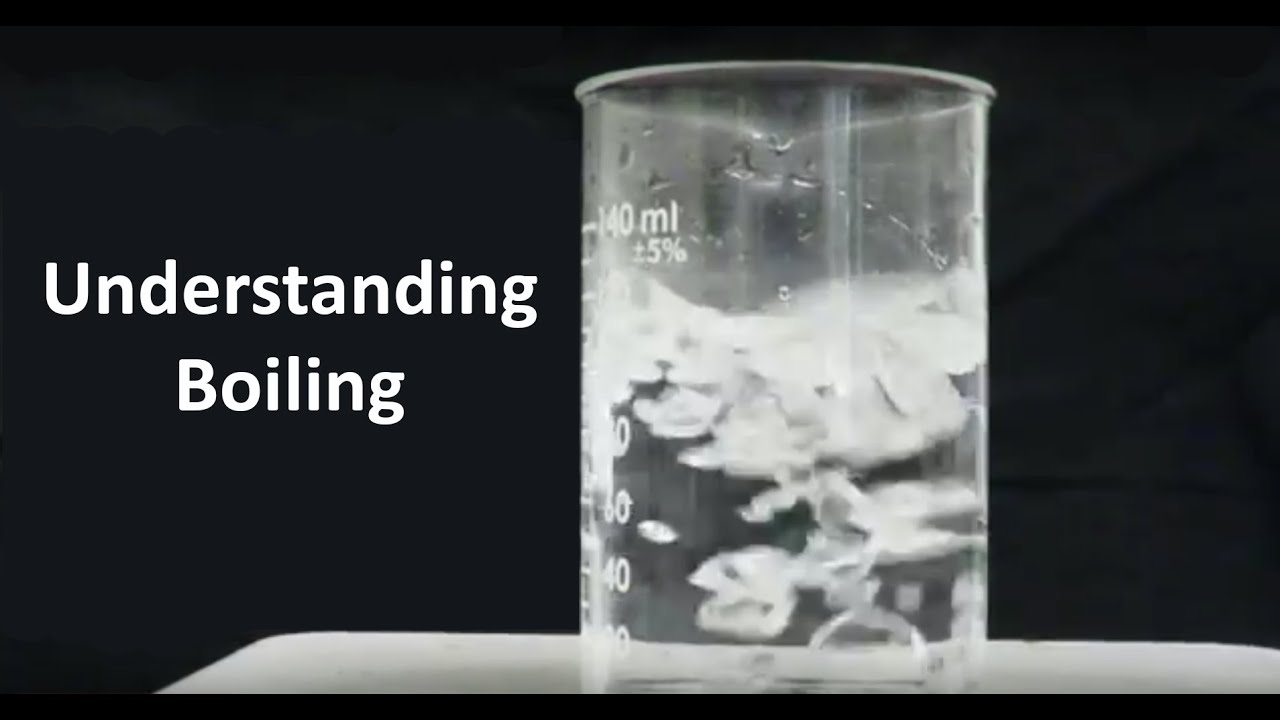
Boiling, Atmospheric Pressure, and Vapor Pressure
A video about the phenomenon of boiling for the Khan Academy talent search contest, July 2016. Images: Image of Earth from Space (1:12): https://commons.wikimedia.org/wiki/Atmosphere#/media/File:Atmo_camadas.svg Layers of Atmosphere (1:21): https://www.grc.nasa.gov/www/k-12/airplane/Images/atmosphere.jpg Mount Everest (2:05): https://commons.wikimedia.org/wiki/File:Mount-Everest.jpg This video is composed of three main sections: - An Introduction to Boiling - Atmospheric Pressure and Boiling - Vapor Pressure and Boiling By understanding the physical phenomenon of boiling other concepts, such as the effect of temperature on molecules, atmospheric pressure, vapor pressure, intermolecular forces, and temperature become more understandable.
Play Video
Play Video
07:31
How Solenoid Valves Work - Basics actuator control valve working principle
How do solenoid valves work? We look at how it works as well as where we use solenoid valves, why we use solenoid valves and what they look like. We look inside the simplified valve to understand the working principle of how a solenoid vale works. LEARN MORE HERE: https://theengineeringmindset.com/how-solenoid-valves-work/ Sign up for our FREE engineers newsletter for updates, competitions, news and offers 🎁 Link: http://engmind.info/Engineers-Report 🏆 Download Magnetic Tool for free - http://bit.ly/DownloadMagneticTool1 The Magnetic Tool app, part of the Danfoss CoolApps Toolbox, makes testing a solenoid valve coil quick and easy and is available globally for Android and iPhone. Download Magnetic Tool for free - http://bit.ly/DownloadMagneticTool1 Get this book ➡️ http://hvacr.life/Best-HVACR-Book Get this tool ➡️ http://hvacr.life/HVAC-Multimeter CORRECTION: 6:46 Video states the direction of current determines whether the valve is NO/NC. This is an error, the internal mechanical design is what determines whether the valve is NO/NC. See example: https://youtu.be/BbmocfETTFo?t=495 👋 SOCIALISE WITH US 👋 ******************************* 👉FACEBOOK: https://facebook.com/theengineeringmindset/ 👉TWITTER: https://twitter.com/TheEngMindset 👉INSTAGRAM: https://instagram.com/engineeringmindset/ 👉WEBSITE: Http://TheEngineeringMindset.com 🙌 SUPPORT US 🙌 ******************************* ⚠️ *Found this video super useful?* Buy Paul a coffee to say thanks: ☕ PayPal: https://www.paypal.me/TheEngineerinMindset 👀 Links - MUST WATCH!! 👀 ******************************* ⚡ELECTRICAL ENGINEERING⚡ 👉How electricity works: https://youtu.be/mc979OhitAg 👉Three Phase Electricity: https://youtu.be/4oRT7PoXSS0 👉How Inverters work: https://youtu.be/ln9VZIL8rVs 👉How TRANSFORMER works: https://youtu.be/UchitHGF4n8 👉How 3 Phase electricity works: https://youtu.be/4oRT7PoXSS0 👉How Induction motor works: https://youtu.be/N7TZ4gm3aUg 👉What is a KWH: https://youtu.be/SMPhh8gT_1E 👉How induction motor works: https://youtu.be/N7TZ4gm3aUg ❄️ CHILLER ENGINEERING ❄️ 👉Chiller Efficiency improvements: https://youtu.be/8x3MiO5XjhY 👉Chilled water schematics: https://youtu.be/ak51DHAiuWo 👉Chiller crash course: https://youtu.be/K0xAKzdROEg 👉Chiller types: https://youtu.be/gYcNDT1d30k 👉Chillers/AHU/RTU: https://youtu.be/UmWWZdJR1hQ 👉Water cooled chiller Part1: https://youtu.be/0rzQhSXVq60 👉Water cooled chiller Part2: https://youtu.be/3ZpE3vCjNqM 👉Water cooled chiller advanced: https://youtu.be/QlKSGDgqGF0 👉Air cooled chiller: https://youtu.be/0R84hLprO5s 👉Absorption Chiller : https://youtu.be/Ic5a9E2ykjo 👉Chiller/Cooling tower/AHU: https://youtu.be/1cvFlBLo4u0 👉Chiller flow rate: https://youtu.be/tA1_V6-dThM 👉Chiller fault troubleshooting: https://youtu.be/Zu0LVVNNVSw 👉Chiller COP calculation: https://youtu.be/h5ILlZ8nyHE 👉Chiller cooling capacity calcs: https://youtu.be/BZxXIdxVKeY 👉Chiller compressors: https://youtu.be/7Bah__spkTY 👉Chiller expansion valve: https://youtu.be/dXiV5YzTZQ4 👉Chiller surge: https://youtu.be/DQK_-vxObiw 👉Chiller condenser: https://youtu.be/p5uuPsyqnwU 👉Chiller evaporator: https://youtu.be/W3w7FpX9j9k 🌡️ HVAC ENGINEERING 🌡️ 👉HVAC Basics: https://youtu.be/klggop60vlM 👉Boilers/AHU/FCU: https://youtu.be/lDeuIQ4VeWk 👉How Heat Pump works: https://youtu.be/G53tTKoakcY 👉Heat pumps advanced: https://youtu.be/G53tTKoakcY 👉Fan Coil Units: https://youtu.be/MqM-U8bftCI 👉VAV Systems: https://youtu.be/HBmOyeWtpHg 👉CAV Systems: https://youtu.be/XgQ3v6lvoZQ 👉VRF Units: https://youtu.be/hzFOCuAho_4 👉Cooling load calculations: https://youtu.be/0gv2tJf7nwo 👉Pulley belt calculations: https://youtu.be/yxCBhD9nguw 👉Pump calculations: https://youtu.be/99vikjRrlgo 👉Fan and motor calculations: https://youtu.be/rl-HQRzL-kg 👉HVAC Cooling coils: https://youtu.be/oSs-4Ptcfhk 👉Cooling towers: https://youtu.be/UzHJWNL2OtM ⚗️ REFRIGERATION SYSTEMS 🌡️ 👉How refrigerants work: https://youtu.be/lMqoKLli0Y4 👉Thermal expansion valves: https://youtu.be/oSLOHCOw3yg 👉Refrigeration design software: https://youtu.be/QqP5aY6liAg 👉Design refrigeration system: https://youtu.be/TPabv9iDENc 👉Reversing valve: https://youtu.be/r8n1_6qmsKQ 👉How A/C units work: https://youtu.be/Uv3GfEQhtPE ⚗️ REFRIGERANTS ⚗️ 👉Refrierant retrofit guide: https://youtu.be/1OqgLcU2buQ 👉Refrigerant types, future: https://youtu.be/J77a0keM2Yk 👉How refrigerants work: https://youtu.be/lMqoKLli0Y4 🌊 HYDRONICS 🌊 👉Primary & Secondary system: https://youtu.be/KU_AypZ-BnU 👉Pumps: https://youtu.be/TxqPAPg4nb4 👉Pump calculations: https://youtu.be/99vikjRrlgo 🔥➡️❄️ HEAT EXCHANGERS 🔥➡️❄️ 👉Plate Heat Exchangers: https://youtu.be/br3gkrXTmdY 👉Micro plate heat exchanger: https://youtu.be/xrsbujk4u6k 💻 DATA CENTERS 💻 👉Data Center cooling: https://youtu.be/xBxyhxmhigc 🔬 PHYSICS 🔬 👉What is Density: https://youtu.be/r0Ej0xB-0C8 control valve automation actuator working principle industrial engineering danfoss process engineering technician #HVAC #refrigeration #engineering
Play Video
Play Video
05:42
How To Use a MULTIMETER (Volts, Amps, Ohms, Continuity)
This is a very quick version of a longer video I did on this topic a couple years ago. This is how to use an electrician's multimeter (tester) in around 5 minutes. You can watch the full version of this video here: https://youtu.be/GNrSiSmB2DU 🤘⚡️EU Learning System⚡️🤘 For Individuals --- https://electricianu.com/learning-system-for-individuals/ For Businesses --- https://electricianu.com/learning-system-for-businesses/ -Video courses on every side of the electrical trade (theory, code, safety, wiring, install, troubleshooting, leadership, and more) -Practice exams for 2017, 2020, 2023 code -YouTube videos categorized and searchable -Audio lessons -Forum -Business version has admin portal and ability to assign learning to technicians and monitor progress -Any business size from 2 techs to 2,000! 🎓💡CONTINUING EDUCATION💡🎓 Sign up here --- https://electricianu.com/continuing-education/ -State Approved -Video Based ✍📝PRACTICE EXAMS📝✍ Get them here --- https://www.electricianu.com/electrician-u-membership/ -2017, 2020, and 2023 NEC versions -Online Residential Wireman Exam -Online Journeyman Exam -Online Master Exam -300 Question Online Code Cannon (not license specific, all code) -Take as many times as you want -All of the above come with printable PDFs 🎤🎧PODCAST🎧🎤 Spotify: https://open.spotify.com/show/7ldCwdxhWnT0R3nne96XjC?si=a42a98b83c3549fc&nd=1 Apple Podcast: https://podcasts.apple.com/us/podcast/electrician-u/id1583270265 📱👍SOCIALS👍📱 TikTok - https://www.tiktok.com/@electricianu Instagram - https://www.instagram.com/electrician_u/ Facebook - https://www.facebook.com/TheElectricianU/ Reddit - https://www.reddit.com/r/ElectricianU/ Rumble - https://rumble.com/c/ElectricianU Discord - https://www.discord.gg/electricianu 🎧🎹Music, Editing, and Videography by Drake Descant and Rob LeBlanc🎹🎧 #electrician #electrical #electricity Many up-and-coming electricians have trouble understanding how to use the various electrical testers out on the market. All of the dials, characters, and options can get a bit confusing if you don’t have experience using a multi-meter. In this episode, I talk about how to use a commonly used tester, the Fluke T5-600. Technically the fluke T5 is not a “multi-meter.” Fluke’s website lists it as a “tester,” while their Multimeter section shows only digital multimeters with no separate jaw-type ammeter. However, a multi-meter is simply a “multi-use meter” - something that can test several different electrical units of measure. The T5 measures voltage, amperage, resistance, and continuity. There are other multi-meters out there that have extra functions but the T5 is for the basic 4 that most electricians will use every day. So how do we use it? VOLTAGE - What you’re doing when you’re testing for voltage is testing the difference of potential between two points. “Voltage” is a difference of potential between two points in an electrical system. It is not a reading of one conductor, it's reading a difference between two. It can even be a difference between one wire and a piece of metal that’s bonded to earth. But keep in mind that you’re trying to get a value that shows “the difference in potential” between TWO things. Flip the dial of the T5 to the “V” and take the leads out of the slide-in slots on the back. Ensure that you’re wearing proper PPE such as insulated “hot-gloves,” and a flash suit if you’re working in an electrical panel. Take one lead and touch it to a known hot conductor or terminal. Take the other lead and touch it to that same conductor or terminal. Notice you get a reading of 0v. This is because this conductor is at the same potential as itself. To get a voltage reading you have to test between two different objects. AMPERAGE - How to use the amperage setting - Flip the dial to the “A” (Amperes). Line your wire up with the two lines inside of the jaw of the ammeter. Only measure one wire at a time. This tester will give you readings up to 100 amps, so for anything more than that you’ll need a larger tester. This makes sense since the max size wire you can fit in the ammeter is 1/0 THHN. If you have larger wires than 1/0 THHN then you’ll need to get your hands on a clamp-on ammeter. RESISTANCE - Flip the dial to the Ohm (Omega) symbol. For this you want to test on a dead circuit so make sure the power is shut off. To test a conductor’s resistance you will need to have access to the beginning and the end of the conductor. Put one lead on the beginning of your conductor and one lead and the end of your conductor. This meter will display how many ohms of resistance there is between the leads. When there is low resistance you will hear a loud toning noise. When you try testing a really high resistance the tester will stop emitting a tone, and will instead just display values. This meter is only good for up to 1,000 ohms. Anything more than 1,000 ohms should really be tested with a megger (megohmmeter)
Phase 3 Resources
Build the essential safety habits, professional standards, and technical awareness needed to advance in the program.
Phase 3 Overview
P3 Videos
Play Video
Play Video
15:34
How Electric Motors Work - 3 phase AC induction motors ac motor
How Electric Motor Works - 3 phase induction motor AC alternating current. 🎁 Sign up for a Free Trial at ➡️ https://greatcourses.thld.co/engineeringmindsetjan Learn from the basics how an electric motor works, where they are used, why they are used, the main parts, the electrical wiring connections, induction motor, alternating current AC, electrical machines, rotating magnetic field, star delta, wye delta. ⚡🛠️ TOOLS YOU NEED 🛠️⚡ ******************************* Get this electronics book ➡️ https://amzn.to/41cCJPk Professional Multimeter -➡️ https://amzn.to/3xu2Vaw Good multimeter -➡️ https://amzn.to/3xrbuTd Professional clamp meter ➡️ https://amzn.to/4140FnK Good Clamp meter ➡️ https://amzn.to/3xqt2is Outlet tester ➡️- https://amzn.to/3kavg2l Energy monitoring plug ➡️ https://amzn.to/3SkfPl7 Battery tester -➡️ https://amzn.to/3S3fHWI Basic electronics ➡️ kit https://amzn.to/3xuLiqS DC Motor explained:👉 https://youtu.be/GQatiB-JHdI Alternators:👉 https://youtu.be/jdSKlg80DjU Star Delta starter:👉 https://youtu.be/h89TTwlNnpY Variable frequency drive:👉 https://youtu.be/yEPe7RDtkgo Power inverter:👉 https://youtu.be/iIqhAX0I7lI Relays:👉 https://youtu.be/n594CkrP6xE 👋 SOCIALISE WITH US 👋 ******************************* 👉FACEBOOK: https://facebook.com/theengineeringmindset/ 👉TWITTER: https://twitter.com/TheEngMindset 👉INSTAGRAM: https://instagram.com/engineeringmindset/ 👉WEBSITE: http://TheEngineeringMindset.com 👀 Links - MUST WATCH!! 👀 ******************************* ⚡ELECTRICAL ENGINEERING⚡ 👉How electricity works: https://youtu.be/mc979OhitAg 👉Three Phase Electricity: https://youtu.be/4oRT7PoXSS0 👉How Inverters work: https://youtu.be/ln9VZIL8rVs 👉How TRANSFORMER works: https://youtu.be/UchitHGF4n8 👉How 3 Phase electricity works: https://youtu.be/4oRT7PoXSS0 👉How Induction motor works: https://youtu.be/N7TZ4gm3aUg 👉What is a KWH: https://youtu.be/SMPhh8gT_1E 👉How induction motor works: https://youtu.be/N7TZ4gm3aUg ❄️ CHILLER ENGINEERING ❄️ 👉Chiller Efficiency improvements: https://youtu.be/8x3MiO5XjhY 👉Chilled water schematics: https://youtu.be/ak51DHAiuWo 👉Chiller crash course: https://youtu.be/K0xAKzdROEg 👉Chiller types: https://youtu.be/gYcNDT1d30k 👉Chillers/AHU/RTU: https://youtu.be/UmWWZdJR1hQ 👉Water cooled chiller Part1: https://youtu.be/0rzQhSXVq60 👉Water cooled chiller Part2: https://youtu.be/3ZpE3vCjNqM 👉Chiller/Cooling tower/AHU: https://youtu.be/1cvFlBLo4u0 👉Chiller flow rate: https://youtu.be/tA1_V6-dThM 👉Chiller fault troubleshooting: https://youtu.be/Zu0LVVNNVSw 👉Chiller COP calculation: https://youtu.be/h5ILlZ8nyHE 👉Chiller cooling capacity calcs: https://youtu.be/BZxXIdxVKeY 👉Chiller compressors: https://youtu.be/7Bah__spkTY 👉Chiller expansion valve: https://youtu.be/dXiV5YzTZQ4 👉Chiller surge: https://youtu.be/DQK_-vxObiw 👉Chiller condenser: https://youtu.be/p5uuPsyqnwU 👉Chiller evaporator: https://youtu.be/W3w7FpX9j9k 👉Chiller compressor centrifugal: https://youtu.be/PT0UIqAGacg 👉Chiller cooling capacity: https://youtu.be/f-N4isgQRGQ 🌡️ HVAC ENGINEERING 🌡️ 👉HVAC Basics: https://youtu.be/klggop60vlM 👉Boilers/AHU/FCU: https://youtu.be/lDeuIQ4VeWk 👉How Heat Pump works: https://youtu.be/G53tTKoakcY 👉Heat pumps advanced: https://youtu.be/G53tTKoakcY 👉Fan Coil Units: https://youtu.be/MqM-U8bftCI 👉VAV Systems: https://youtu.be/HBmOyeWtpHg 👉CAV Systems: https://youtu.be/XgQ3v6lvoZQ 👉VRF Units: https://youtu.be/hzFOCuAho_4 👉Cooling load calculations: https://youtu.be/0gv2tJf7nwo 👉Pulley belt calculations: https://youtu.be/yxCBhD9nguw 👉Pump calculations: https://youtu.be/99vikjRrlgo 👉Fan and motor calculations: https://youtu.be/rl-HQRzL-kg 👉HVAC Cooling coils: https://youtu.be/oSs-4Ptcfhk 👉Cooling towers: https://youtu.be/UzHJWNL2OtM ⚗️ REFRIGERATION SYSTEMS 🌡️ 👉How refrigerants work: https://youtu.be/lMqoKLli0Y4 👉Thermal expansion valves: https://youtu.be/oSLOHCOw3yg 👉Refrigeration design software: https://youtu.be/QqP5aY6liAg 👉Design refrigeration system: https://youtu.be/TPabv9iDENc 👉Reversing valve: https://youtu.be/r8n1_6qmsKQ 👉How A/C units work: https://youtu.be/Uv3GfEQhtPE ⚗️ REFRIGERANTS ⚗️ 👉Refrierant retrofit guide: https://youtu.be/1OqgLcU2buQ 👉Refrigerant types, future: https://youtu.be/J77a0keM2Yk 👉How refrigerants work: https://youtu.be/lMqoKLli0Y4 🌊 HYDRONICS 🌊 👉Primary & Secondary system: https://youtu.be/KU_AypZ-BnU 👉Pumps: https://youtu.be/TxqPAPg4nb4 👉Pump calculations: https://youtu.be/99vikjRrlgo 🔥➡️❄️ HEAT EXCHANGERS 🔥➡️❄️ 👉Plate Heat Exchangers: https://youtu.be/br3gkrXTmdY 👉Micro plate heat exchanger: https://youtu.be/xrsbujk4u6k 💻 DATA CENTERS 💻 👉Data Center cooling: https://youtu.be/xBxyhxmhigc 🔬 PHYSICS 🔬 👉What is Density: https://youtu.be/r0Ej0xB-0C8 🎬 DOCUMENTARY 🎬 👉WW2 Bunker HVAC engineering: https://youtu.be/xEzz-JkPeLQ ac motor #engineering #electrical #tesla synchronous motor amp 3 phase AC induction motors ac motor electrical machines tesla synchronous motor rotating magnetic field amp
Play Video
Play Video
07:51
What's inside a Thermal Expansion Valve TXV - how it works hvac
Whats inside a thermal expansion valve and how the thermostatic expansion valve or TXV works in a HVAC refrigeration system and the basic working principles that allow it to meter the flow of refrigerant into the evaporator of chillers and ac units http://engineers.news/Click-For-A-Prize LEARN MORE HERE: https://theengineeringmindset.com/inside-thermal-expansion-valves/ Sign up for our FREE engineers newsletter for updates, competitions, news and offers 🎁 Link: http://engmind.info/Engineers-Report Download TXV Superheat Tuner for free - http://bit.ly/GetTXVsuperheattuner Take the guesswork out of superheat adjustments and cut service time down to just 15 minutes with TXV Superheat Tuner, available for free on Android and iPhone mobile devices. Optimize superheat with just one or two adjustments on most thermostatic expansion valves. Download TXV Superheat Tuner for free - http://bit.ly/GetTXVsuperheattuner ⚡🛠️ TOOLS YOU NEED 🛠️⚡ ************************************** Get this HVACR book ➡️ https://amzn.to/3XFCaKC Professional Multimeter -➡️ https://amzn.to/3xu2Vaw Good multimeter -➡️ https://amzn.to/3xrbuTd Professional clamp meter ➡️ https://amzn.to/4140FnK Good Clamp meter ➡️ https://amzn.to/3xqt2is Outlet tester ➡️- https://amzn.to/3kavg2l Energy monitoring plug ➡️ https://amzn.to/3SkfPl7 Battery tester -➡️ https://amzn.to/3S3fHWI Basic electronics kit ➡️ https://amzn.to/3xuLiqS MY FAVOURITE GEAR 🎥 My camera - https://amzn.to/3YCZ7Q9 🎤 My Microphone - https://amzn.to/3YYXsUC ⌨️ My Keyboard - https://amzn.to/3lBsl33 🖥️ My monitor - https://amzn.to/415BGjW 🎧 My headphones - https://amzn.to/3lN7R7u SOCIALISE WITH US ******************************* FACEBOOK: https://facebook.com/theengineeringmindset/ TWITTER: https://twitter.com/TheEngMindset INSTAGRAM: https://instagram.com/engineeringmindset/ WEBSITE: Http://TheEngineeringMindset.com SUPPORT US ******************************* ⚠️ *Found this video super useful?* Buy Paul a coffee to say thanks: ☕ PayPal: https://www.paypal.me/TheEngineerinMindset Links - MUST WATCH!! ******************************* ⚡ELECTRICAL ENGINEERING⚡ How electricity works: https://youtu.be/mc979OhitAg Three Phase Electricity: https://youtu.be/4oRT7PoXSS0 How Inverters work: https://youtu.be/ln9VZIL8rVs How TRANSFORMER works: https://youtu.be/UchitHGF4n8 How 3 Phase electricity works: https://youtu.be/4oRT7PoXSS0 How Induction motor works: https://youtu.be/N7TZ4gm3aUg What is a KWH: https://youtu.be/SMPhh8gT_1E How induction motor works: https://youtu.be/N7TZ4gm3aUg ❄️ CHILLER ENGINEERING ❄️ Chiller Efficiency improvements: https://youtu.be/8x3MiO5XjhY Chilled water schematics: https://youtu.be/ak51DHAiuWo Chiller crash course: https://youtu.be/K0xAKzdROEg Chiller types: https://youtu.be/gYcNDT1d30k Chillers/AHU/RTU: https://youtu.be/UmWWZdJR1hQ Water cooled chiller Part1: https://youtu.be/0rzQhSXVq60 Chiller surge: https://youtu.be/DQK_-vxObiw Chiller condenser: https://youtu.be/p5uuPsyqnwU Chiller evaporator: https://youtu.be/W3w7FpX9j9k Chiller compressor centrifugal: https://youtu.be/PT0UIqAGacg Chiller cooling capacity: https://youtu.be/f-N4isgQRGQ ️ HVAC ENGINEERING ️ HVAC Basics: https://youtu.be/klggop60vlM Boilers/AHU/FCU: https://youtu.be/lDeuIQ4VeWk How Heat Pump works: https://youtu.be/G53tTKoakcY VRF Units: https://youtu.be/hzFOCuAho_4 Cooling load calculations: https://youtu.be/0gv2tJf7nwo Pulley belt calculations: https://youtu.be/yxCBhD9nguw Pump calculations: https://youtu.be/99vikjRrlgo Fan and motor calculations: https://youtu.be/rl-HQRzL-kg HVAC Cooling coils: https://youtu.be/oSs-4Ptcfhk Cooling towers: https://youtu.be/UzHJWNL2OtM ⚗️ REFRIGERATION SYSTEMS ️ How refrigerants work: https://youtu.be/lMqoKLli0Y4 Thermal expansion valves: https://youtu.be/oSLOHCOw3yg Refrigeration design software: https://youtu.be/QqP5aY6liAg Design refrigeration system: https://youtu.be/TPabv9iDENc Reversing valve: https://youtu.be/r8n1_6qmsKQ How A/C units work: https://youtu.be/Uv3GfEQhtPE ⚗️ REFRIGERANTS ⚗️ Refrierant retrofit guide: https://youtu.be/1OqgLcU2buQ Refrigerant types, future: https://youtu.be/J77a0keM2Yk How refrigerants work: https://youtu.be/lMqoKLli0Y4 HYDRONICS Primary & Secondary system: https://youtu.be/KU_AypZ-BnU Pumps: https://youtu.be/TxqPAPg4nb4 Pump calculations: https://youtu.be/99vikjRrlgo ➡️❄️ HEAT EXCHANGERS ➡️❄️ Plate Heat Exchangers: https://youtu.be/br3gkrXTmdY Micro plate heat exchanger: https://youtu.be/xrsbujk4u6k DATA CENTERS Data Center cooling: https://youtu.be/xBxyhxmhigc PHYSICS What is Density: https://youtu.be/r0Ej0xB-0C8 DOCUMENTARY WW2 Bunker HVAC engineering: https://youtu.be/xEzz-JkPeLQ danfoss vrv technician #HVAC #refrigeration #engineering
Play Video
Play Video
04:18
HVAC/R Condenser Basics
Bryan covers HVAC/R condenser basics. He gives a basic overview of the HVAC/R condenser and what it does in air conditioning and refrigeration systems. A condenser rejects heat from the refrigerant, making it the opposite of the evaporator. The condenser does three different things in three phases. First, the condenser desuperheats the refrigerant, bringing it down to the condensing temperature (where it can change state). Then, the middle of the condenser is where the refrigerant actually turns from a vapor to a liquid. The last few rows of the condenser are where subcooling occurs, which is when the liquid refrigerant's temperature drops below the saturation (condensing) temperature. To accomplish all three of those functions, the condenser rejects its heat to another substance, typically air. (However, there are some systems that reject heat to liquids like water and glycol via heat exchangers.) Regardless of where the rejected heat is going, the main goal is to get the heat out of the refrigerant and to something else. Whatever that "something else" is, it must have a lower temperature than the refrigerant. Otherwise, heat transfer can't occur because heat moves from areas with higher temperatures to lower temperatures. That "something else" must also have a temperature below the condensing temperature. Many condensers are piped so that the refrigerant enters the condenser from the top and makes its way down (subcooling at the bottom). Read all the tech tips, take the quizzes, and find our handy calculators at https://www.hvacrschool.com/
Play Video
Play Video
12:44
Basic Refrigeration cycle - How it works
In this video we look at how a refrigeration cycle works and use colour coding to see how the temperature and pressure changes throughout a system. We include photographs of real items so you know what to look for in the real world. We look at the condenser, evaporator, compressor and expansion valve. LEARN MORE HERE: https://theengineeringmindset.com/hvacr/ Sign up for our FREE engineers newsletter for updates, competitions, news and offers 🎁 Link: http://engmind.info/Engineers-Report ⚡🛠️ TOOLS YOU NEED 🛠️⚡ ************************************** Get this HVACR book ➡️ https://amzn.to/3XFCaKC Professional Multimeter -➡️ https://amzn.to/3xu2Vaw Good multimeter -➡️ https://amzn.to/3xrbuTd Professional clamp meter ➡️ https://amzn.to/4140FnK Good Clamp meter ➡️ https://amzn.to/3xqt2is Outlet tester ➡️- https://amzn.to/3kavg2l Energy monitoring plug ➡️ https://amzn.to/3SkfPl7 Battery tester -➡️ https://amzn.to/3S3fHWI Basic electronics kit ➡️ https://amzn.to/3xuLiqS MY FAVOURITE GEAR 🎥 My camera - https://amzn.to/3YCZ7Q9 🎤 My Microphone - https://amzn.to/3YYXsUC ⌨️ My Keyboard - https://amzn.to/3lBsl33 🖥️ My monitor - https://amzn.to/415BGjW 🎧 My headphones - https://amzn.to/3lN7R7u 😎 Get your Engineers T-shirts, Hoodies, Cups & stickers here: ******************************* https://goo.gl/M1PGrx ☕ Buy Paul a coffee to say thanks ******************************* PayPal: https://www.paypal.me/TheEngineerinMindset 🙏 Support us on Patreon ******************************* https://www.patreon.com/theengineeringmindset 🕵️ Check out our website! ******************************* http://TheEngineeringMindset.com 👥 Socialise with us ******************************* FACEBOOK: https://www.facebook.com/theengineeringmindset TWITTER: https://twitter.com/TheEngMindset Instagram: https://www.instagram.com/engineeringmindset/ Google+: http://www.google.com/+Theengineeringmindset YouTube: http://www.youtube.com/theengineeringmindset 👀 Links - MUST WATCH!! 👀 ******************************* How water cooled chiller works Prt1 - https://youtu.be/0rzQhSXVq60 How water cooled chiller works Prt2 - https://youtu.be/3ZpE3vCjNqM How Air cooled chiller works - https://youtu.be/0R84hLprO5s How Absorption Chiller works - https://youtu.be/Ic5a9E2ykjo How Heat Pump works: https://youtu.be/G53tTKoakcY Primary & Secondary system: https://youtu.be/KU_AypZ-BnU Fan Coil Units: https://youtu.be/MqM-U8bftCI VAV Systems: https://youtu.be/HBmOyeWtpHg CAV Systems: https://youtu.be/XgQ3v6lvoZQ VRF Units: https://youtu.be/hzFOCuAho_4 HVAC Basics: https://youtu.be/klggop60vlM Heat Exchangers: https://youtu.be/br3gkrXTmdY Pumps: https://youtu.be/TxqPAPg4nb4 How a Chiller, Cooling Tower and Air Handling Unit work together - https://youtu.be/1cvFlBLo4u0 🔧🔨 Tools you need 🔧🔨 ******************************* VDE Screwdriver set: http://amzn.to/2jd4lQc Ratchet Screwdriver set: http://amzn.to/2iDLRsC Tape Measure: http://amzn.to/2zbqq8z Drill: http://amzn.to/2iFj3Qy Drill bits: http://amzn.to/2hK4BG1 Angle finder: http://amzn.to/2za6N0s Multi set square: http://amzn.to/2hIpWiY Level: http://amzn.to/2BaHSLJ T handle hex allen key: http://amzn.to/2z9OEjs Digital vernier: http://amzn.to/2hI5K0D Hammer: http://amzn.to/2hJj0lw Calculator: http://amzn.to/2z99yPx Multimeter: http://amzn.to/2Bbq5no Head torch: http://amzn.to/2z84sD7 Pocket torch: http://amzn.to/2zWfCyB Magnetic wristband: http://amzn.to/2iEnA5z Laser distance finder: http://amzn.to/2hL4KsM Gorilla tape: http://amzn.to/2zqxiTm #HVAC refrigeration #engineering
Play Video
Play Video
06:05
Boiling, Atmospheric Pressure, and Vapor Pressure
A video about the phenomenon of boiling for the Khan Academy talent search contest, July 2016. Images: Image of Earth from Space (1:12): https://commons.wikimedia.org/wiki/Atmosphere#/media/File:Atmo_camadas.svg Layers of Atmosphere (1:21): https://www.grc.nasa.gov/www/k-12/airplane/Images/atmosphere.jpg Mount Everest (2:05): https://commons.wikimedia.org/wiki/File:Mount-Everest.jpg This video is composed of three main sections: - An Introduction to Boiling - Atmospheric Pressure and Boiling - Vapor Pressure and Boiling By understanding the physical phenomenon of boiling other concepts, such as the effect of temperature on molecules, atmospheric pressure, vapor pressure, intermolecular forces, and temperature become more understandable.
Play Video
Play Video
05:42
How To Use a MULTIMETER (Volts, Amps, Ohms, Continuity)
This is a very quick version of a longer video I did on this topic a couple years ago. This is how to use an electrician's multimeter (tester) in around 5 minutes. You can watch the full version of this video here: https://youtu.be/GNrSiSmB2DU 🤘⚡️EU Learning System⚡️🤘 For Individuals --- https://electricianu.com/learning-system-for-individuals/ For Businesses --- https://electricianu.com/learning-system-for-businesses/ -Video courses on every side of the electrical trade (theory, code, safety, wiring, install, troubleshooting, leadership, and more) -Practice exams for 2017, 2020, 2023 code -YouTube videos categorized and searchable -Audio lessons -Forum -Business version has admin portal and ability to assign learning to technicians and monitor progress -Any business size from 2 techs to 2,000! 🎓💡CONTINUING EDUCATION💡🎓 Sign up here --- https://electricianu.com/continuing-education/ -State Approved -Video Based ✍📝PRACTICE EXAMS📝✍ Get them here --- https://www.electricianu.com/electrician-u-membership/ -2017, 2020, and 2023 NEC versions -Online Residential Wireman Exam -Online Journeyman Exam -Online Master Exam -300 Question Online Code Cannon (not license specific, all code) -Take as many times as you want -All of the above come with printable PDFs 🎤🎧PODCAST🎧🎤 Spotify: https://open.spotify.com/show/7ldCwdxhWnT0R3nne96XjC?si=a42a98b83c3549fc&nd=1 Apple Podcast: https://podcasts.apple.com/us/podcast/electrician-u/id1583270265 📱👍SOCIALS👍📱 TikTok - https://www.tiktok.com/@electricianu Instagram - https://www.instagram.com/electrician_u/ Facebook - https://www.facebook.com/TheElectricianU/ Reddit - https://www.reddit.com/r/ElectricianU/ Rumble - https://rumble.com/c/ElectricianU Discord - https://www.discord.gg/electricianu 🎧🎹Music, Editing, and Videography by Drake Descant and Rob LeBlanc🎹🎧 #electrician #electrical #electricity Many up-and-coming electricians have trouble understanding how to use the various electrical testers out on the market. All of the dials, characters, and options can get a bit confusing if you don’t have experience using a multi-meter. In this episode, I talk about how to use a commonly used tester, the Fluke T5-600. Technically the fluke T5 is not a “multi-meter.” Fluke’s website lists it as a “tester,” while their Multimeter section shows only digital multimeters with no separate jaw-type ammeter. However, a multi-meter is simply a “multi-use meter” - something that can test several different electrical units of measure. The T5 measures voltage, amperage, resistance, and continuity. There are other multi-meters out there that have extra functions but the T5 is for the basic 4 that most electricians will use every day. So how do we use it? VOLTAGE - What you’re doing when you’re testing for voltage is testing the difference of potential between two points. “Voltage” is a difference of potential between two points in an electrical system. It is not a reading of one conductor, it's reading a difference between two. It can even be a difference between one wire and a piece of metal that’s bonded to earth. But keep in mind that you’re trying to get a value that shows “the difference in potential” between TWO things. Flip the dial of the T5 to the “V” and take the leads out of the slide-in slots on the back. Ensure that you’re wearing proper PPE such as insulated “hot-gloves,” and a flash suit if you’re working in an electrical panel. Take one lead and touch it to a known hot conductor or terminal. Take the other lead and touch it to that same conductor or terminal. Notice you get a reading of 0v. This is because this conductor is at the same potential as itself. To get a voltage reading you have to test between two different objects. AMPERAGE - How to use the amperage setting - Flip the dial to the “A” (Amperes). Line your wire up with the two lines inside of the jaw of the ammeter. Only measure one wire at a time. This tester will give you readings up to 100 amps, so for anything more than that you’ll need a larger tester. This makes sense since the max size wire you can fit in the ammeter is 1/0 THHN. If you have larger wires than 1/0 THHN then you’ll need to get your hands on a clamp-on ammeter. RESISTANCE - Flip the dial to the Ohm (Omega) symbol. For this you want to test on a dead circuit so make sure the power is shut off. To test a conductor’s resistance you will need to have access to the beginning and the end of the conductor. Put one lead on the beginning of your conductor and one lead and the end of your conductor. This meter will display how many ohms of resistance there is between the leads. When there is low resistance you will hear a loud toning noise. When you try testing a really high resistance the tester will stop emitting a tone, and will instead just display values. This meter is only good for up to 1,000 ohms. Anything more than 1,000 ohms should really be tested with a megger (megohmmeter)
Play Video
Play Video
07:31
How Solenoid Valves Work - Basics actuator control valve working principle
How do solenoid valves work? We look at how it works as well as where we use solenoid valves, why we use solenoid valves and what they look like. We look inside the simplified valve to understand the working principle of how a solenoid vale works. LEARN MORE HERE: https://theengineeringmindset.com/how-solenoid-valves-work/ Sign up for our FREE engineers newsletter for updates, competitions, news and offers 🎁 Link: http://engmind.info/Engineers-Report 🏆 Download Magnetic Tool for free - http://bit.ly/DownloadMagneticTool1 The Magnetic Tool app, part of the Danfoss CoolApps Toolbox, makes testing a solenoid valve coil quick and easy and is available globally for Android and iPhone. Download Magnetic Tool for free - http://bit.ly/DownloadMagneticTool1 Get this book ➡️ http://hvacr.life/Best-HVACR-Book Get this tool ➡️ http://hvacr.life/HVAC-Multimeter CORRECTION: 6:46 Video states the direction of current determines whether the valve is NO/NC. This is an error, the internal mechanical design is what determines whether the valve is NO/NC. See example: https://youtu.be/BbmocfETTFo?t=495 👋 SOCIALISE WITH US 👋 ******************************* 👉FACEBOOK: https://facebook.com/theengineeringmindset/ 👉TWITTER: https://twitter.com/TheEngMindset 👉INSTAGRAM: https://instagram.com/engineeringmindset/ 👉WEBSITE: Http://TheEngineeringMindset.com 🙌 SUPPORT US 🙌 ******************************* ⚠️ *Found this video super useful?* Buy Paul a coffee to say thanks: ☕ PayPal: https://www.paypal.me/TheEngineerinMindset 👀 Links - MUST WATCH!! 👀 ******************************* ⚡ELECTRICAL ENGINEERING⚡ 👉How electricity works: https://youtu.be/mc979OhitAg 👉Three Phase Electricity: https://youtu.be/4oRT7PoXSS0 👉How Inverters work: https://youtu.be/ln9VZIL8rVs 👉How TRANSFORMER works: https://youtu.be/UchitHGF4n8 👉How 3 Phase electricity works: https://youtu.be/4oRT7PoXSS0 👉How Induction motor works: https://youtu.be/N7TZ4gm3aUg 👉What is a KWH: https://youtu.be/SMPhh8gT_1E 👉How induction motor works: https://youtu.be/N7TZ4gm3aUg ❄️ CHILLER ENGINEERING ❄️ 👉Chiller Efficiency improvements: https://youtu.be/8x3MiO5XjhY 👉Chilled water schematics: https://youtu.be/ak51DHAiuWo 👉Chiller crash course: https://youtu.be/K0xAKzdROEg 👉Chiller types: https://youtu.be/gYcNDT1d30k 👉Chillers/AHU/RTU: https://youtu.be/UmWWZdJR1hQ 👉Water cooled chiller Part1: https://youtu.be/0rzQhSXVq60 👉Water cooled chiller Part2: https://youtu.be/3ZpE3vCjNqM 👉Water cooled chiller advanced: https://youtu.be/QlKSGDgqGF0 👉Air cooled chiller: https://youtu.be/0R84hLprO5s 👉Absorption Chiller : https://youtu.be/Ic5a9E2ykjo 👉Chiller/Cooling tower/AHU: https://youtu.be/1cvFlBLo4u0 👉Chiller flow rate: https://youtu.be/tA1_V6-dThM 👉Chiller fault troubleshooting: https://youtu.be/Zu0LVVNNVSw 👉Chiller COP calculation: https://youtu.be/h5ILlZ8nyHE 👉Chiller cooling capacity calcs: https://youtu.be/BZxXIdxVKeY 👉Chiller compressors: https://youtu.be/7Bah__spkTY 👉Chiller expansion valve: https://youtu.be/dXiV5YzTZQ4 👉Chiller surge: https://youtu.be/DQK_-vxObiw 👉Chiller condenser: https://youtu.be/p5uuPsyqnwU 👉Chiller evaporator: https://youtu.be/W3w7FpX9j9k 🌡️ HVAC ENGINEERING 🌡️ 👉HVAC Basics: https://youtu.be/klggop60vlM 👉Boilers/AHU/FCU: https://youtu.be/lDeuIQ4VeWk 👉How Heat Pump works: https://youtu.be/G53tTKoakcY 👉Heat pumps advanced: https://youtu.be/G53tTKoakcY 👉Fan Coil Units: https://youtu.be/MqM-U8bftCI 👉VAV Systems: https://youtu.be/HBmOyeWtpHg 👉CAV Systems: https://youtu.be/XgQ3v6lvoZQ 👉VRF Units: https://youtu.be/hzFOCuAho_4 👉Cooling load calculations: https://youtu.be/0gv2tJf7nwo 👉Pulley belt calculations: https://youtu.be/yxCBhD9nguw 👉Pump calculations: https://youtu.be/99vikjRrlgo 👉Fan and motor calculations: https://youtu.be/rl-HQRzL-kg 👉HVAC Cooling coils: https://youtu.be/oSs-4Ptcfhk 👉Cooling towers: https://youtu.be/UzHJWNL2OtM ⚗️ REFRIGERATION SYSTEMS 🌡️ 👉How refrigerants work: https://youtu.be/lMqoKLli0Y4 👉Thermal expansion valves: https://youtu.be/oSLOHCOw3yg 👉Refrigeration design software: https://youtu.be/QqP5aY6liAg 👉Design refrigeration system: https://youtu.be/TPabv9iDENc 👉Reversing valve: https://youtu.be/r8n1_6qmsKQ 👉How A/C units work: https://youtu.be/Uv3GfEQhtPE ⚗️ REFRIGERANTS ⚗️ 👉Refrierant retrofit guide: https://youtu.be/1OqgLcU2buQ 👉Refrigerant types, future: https://youtu.be/J77a0keM2Yk 👉How refrigerants work: https://youtu.be/lMqoKLli0Y4 🌊 HYDRONICS 🌊 👉Primary & Secondary system: https://youtu.be/KU_AypZ-BnU 👉Pumps: https://youtu.be/TxqPAPg4nb4 👉Pump calculations: https://youtu.be/99vikjRrlgo 🔥➡️❄️ HEAT EXCHANGERS 🔥➡️❄️ 👉Plate Heat Exchangers: https://youtu.be/br3gkrXTmdY 👉Micro plate heat exchanger: https://youtu.be/xrsbujk4u6k 💻 DATA CENTERS 💻 👉Data Center cooling: https://youtu.be/xBxyhxmhigc 🔬 PHYSICS 🔬 👉What is Density: https://youtu.be/r0Ej0xB-0C8 control valve automation actuator working principle industrial engineering danfoss process engineering technician #HVAC #refrigeration #engineering
Play Video
Play Video
04:17
What are some common metric unit prefixes? (nano, micro, milli, centi, kilo, mega, giga)
© The Maths Studio (themathsstudio.net) A short discussion about the common metric prefixes in use including nano (n), micro (μ), milli (m), centi (c), kilo (k), mega (M) and giga (G).
Review the Basics
Play Video
Play Video
06:05
Boiling, Atmospheric Pressure, and Vapor Pressure
A video about the phenomenon of boiling for the Khan Academy talent search contest, July 2016. Images: Image of Earth from Space (1:12): https://commons.wikimedia.org/wiki/Atmosphere#/media/File:Atmo_camadas.svg Layers of Atmosphere (1:21): https://www.grc.nasa.gov/www/k-12/airplane/Images/atmosphere.jpg Mount Everest (2:05): https://commons.wikimedia.org/wiki/File:Mount-Everest.jpg This video is composed of three main sections: - An Introduction to Boiling - Atmospheric Pressure and Boiling - Vapor Pressure and Boiling By understanding the physical phenomenon of boiling other concepts, such as the effect of temperature on molecules, atmospheric pressure, vapor pressure, intermolecular forces, and temperature become more understandable.
Play Video
Play Video
05:42
How To Use a MULTIMETER (Volts, Amps, Ohms, Continuity)
This is a very quick version of a longer video I did on this topic a couple years ago. This is how to use an electrician's multimeter (tester) in around 5 minutes. You can watch the full version of this video here: https://youtu.be/GNrSiSmB2DU 🤘⚡️EU Learning System⚡️🤘 For Individuals --- https://electricianu.com/learning-system-for-individuals/ For Businesses --- https://electricianu.com/learning-system-for-businesses/ -Video courses on every side of the electrical trade (theory, code, safety, wiring, install, troubleshooting, leadership, and more) -Practice exams for 2017, 2020, 2023 code -YouTube videos categorized and searchable -Audio lessons -Forum -Business version has admin portal and ability to assign learning to technicians and monitor progress -Any business size from 2 techs to 2,000! 🎓💡CONTINUING EDUCATION💡🎓 Sign up here --- https://electricianu.com/continuing-education/ -State Approved -Video Based ✍📝PRACTICE EXAMS📝✍ Get them here --- https://www.electricianu.com/electrician-u-membership/ -2017, 2020, and 2023 NEC versions -Online Residential Wireman Exam -Online Journeyman Exam -Online Master Exam -300 Question Online Code Cannon (not license specific, all code) -Take as many times as you want -All of the above come with printable PDFs 🎤🎧PODCAST🎧🎤 Spotify: https://open.spotify.com/show/7ldCwdxhWnT0R3nne96XjC?si=a42a98b83c3549fc&nd=1 Apple Podcast: https://podcasts.apple.com/us/podcast/electrician-u/id1583270265 📱👍SOCIALS👍📱 TikTok - https://www.tiktok.com/@electricianu Instagram - https://www.instagram.com/electrician_u/ Facebook - https://www.facebook.com/TheElectricianU/ Reddit - https://www.reddit.com/r/ElectricianU/ Rumble - https://rumble.com/c/ElectricianU Discord - https://www.discord.gg/electricianu 🎧🎹Music, Editing, and Videography by Drake Descant and Rob LeBlanc🎹🎧 #electrician #electrical #electricity Many up-and-coming electricians have trouble understanding how to use the various electrical testers out on the market. All of the dials, characters, and options can get a bit confusing if you don’t have experience using a multi-meter. In this episode, I talk about how to use a commonly used tester, the Fluke T5-600. Technically the fluke T5 is not a “multi-meter.” Fluke’s website lists it as a “tester,” while their Multimeter section shows only digital multimeters with no separate jaw-type ammeter. However, a multi-meter is simply a “multi-use meter” - something that can test several different electrical units of measure. The T5 measures voltage, amperage, resistance, and continuity. There are other multi-meters out there that have extra functions but the T5 is for the basic 4 that most electricians will use every day. So how do we use it? VOLTAGE - What you’re doing when you’re testing for voltage is testing the difference of potential between two points. “Voltage” is a difference of potential between two points in an electrical system. It is not a reading of one conductor, it's reading a difference between two. It can even be a difference between one wire and a piece of metal that’s bonded to earth. But keep in mind that you’re trying to get a value that shows “the difference in potential” between TWO things. Flip the dial of the T5 to the “V” and take the leads out of the slide-in slots on the back. Ensure that you’re wearing proper PPE such as insulated “hot-gloves,” and a flash suit if you’re working in an electrical panel. Take one lead and touch it to a known hot conductor or terminal. Take the other lead and touch it to that same conductor or terminal. Notice you get a reading of 0v. This is because this conductor is at the same potential as itself. To get a voltage reading you have to test between two different objects. AMPERAGE - How to use the amperage setting - Flip the dial to the “A” (Amperes). Line your wire up with the two lines inside of the jaw of the ammeter. Only measure one wire at a time. This tester will give you readings up to 100 amps, so for anything more than that you’ll need a larger tester. This makes sense since the max size wire you can fit in the ammeter is 1/0 THHN. If you have larger wires than 1/0 THHN then you’ll need to get your hands on a clamp-on ammeter. RESISTANCE - Flip the dial to the Ohm (Omega) symbol. For this you want to test on a dead circuit so make sure the power is shut off. To test a conductor’s resistance you will need to have access to the beginning and the end of the conductor. Put one lead on the beginning of your conductor and one lead and the end of your conductor. This meter will display how many ohms of resistance there is between the leads. When there is low resistance you will hear a loud toning noise. When you try testing a really high resistance the tester will stop emitting a tone, and will instead just display values. This meter is only good for up to 1,000 ohms. Anything more than 1,000 ohms should really be tested with a megger (megohmmeter)
Play Video
Play Video
07:31
How Solenoid Valves Work - Basics actuator control valve working principle
How do solenoid valves work? We look at how it works as well as where we use solenoid valves, why we use solenoid valves and what they look like. We look inside the simplified valve to understand the working principle of how a solenoid vale works. LEARN MORE HERE: https://theengineeringmindset.com/how-solenoid-valves-work/ Sign up for our FREE engineers newsletter for updates, competitions, news and offers 🎁 Link: http://engmind.info/Engineers-Report 🏆 Download Magnetic Tool for free - http://bit.ly/DownloadMagneticTool1 The Magnetic Tool app, part of the Danfoss CoolApps Toolbox, makes testing a solenoid valve coil quick and easy and is available globally for Android and iPhone. Download Magnetic Tool for free - http://bit.ly/DownloadMagneticTool1 Get this book ➡️ http://hvacr.life/Best-HVACR-Book Get this tool ➡️ http://hvacr.life/HVAC-Multimeter CORRECTION: 6:46 Video states the direction of current determines whether the valve is NO/NC. This is an error, the internal mechanical design is what determines whether the valve is NO/NC. See example: https://youtu.be/BbmocfETTFo?t=495 👋 SOCIALISE WITH US 👋 ******************************* 👉FACEBOOK: https://facebook.com/theengineeringmindset/ 👉TWITTER: https://twitter.com/TheEngMindset 👉INSTAGRAM: https://instagram.com/engineeringmindset/ 👉WEBSITE: Http://TheEngineeringMindset.com 🙌 SUPPORT US 🙌 ******************************* ⚠️ *Found this video super useful?* Buy Paul a coffee to say thanks: ☕ PayPal: https://www.paypal.me/TheEngineerinMindset 👀 Links - MUST WATCH!! 👀 ******************************* ⚡ELECTRICAL ENGINEERING⚡ 👉How electricity works: https://youtu.be/mc979OhitAg 👉Three Phase Electricity: https://youtu.be/4oRT7PoXSS0 👉How Inverters work: https://youtu.be/ln9VZIL8rVs 👉How TRANSFORMER works: https://youtu.be/UchitHGF4n8 👉How 3 Phase electricity works: https://youtu.be/4oRT7PoXSS0 👉How Induction motor works: https://youtu.be/N7TZ4gm3aUg 👉What is a KWH: https://youtu.be/SMPhh8gT_1E 👉How induction motor works: https://youtu.be/N7TZ4gm3aUg ❄️ CHILLER ENGINEERING ❄️ 👉Chiller Efficiency improvements: https://youtu.be/8x3MiO5XjhY 👉Chilled water schematics: https://youtu.be/ak51DHAiuWo 👉Chiller crash course: https://youtu.be/K0xAKzdROEg 👉Chiller types: https://youtu.be/gYcNDT1d30k 👉Chillers/AHU/RTU: https://youtu.be/UmWWZdJR1hQ 👉Water cooled chiller Part1: https://youtu.be/0rzQhSXVq60 👉Water cooled chiller Part2: https://youtu.be/3ZpE3vCjNqM 👉Water cooled chiller advanced: https://youtu.be/QlKSGDgqGF0 👉Air cooled chiller: https://youtu.be/0R84hLprO5s 👉Absorption Chiller : https://youtu.be/Ic5a9E2ykjo 👉Chiller/Cooling tower/AHU: https://youtu.be/1cvFlBLo4u0 👉Chiller flow rate: https://youtu.be/tA1_V6-dThM 👉Chiller fault troubleshooting: https://youtu.be/Zu0LVVNNVSw 👉Chiller COP calculation: https://youtu.be/h5ILlZ8nyHE 👉Chiller cooling capacity calcs: https://youtu.be/BZxXIdxVKeY 👉Chiller compressors: https://youtu.be/7Bah__spkTY 👉Chiller expansion valve: https://youtu.be/dXiV5YzTZQ4 👉Chiller surge: https://youtu.be/DQK_-vxObiw 👉Chiller condenser: https://youtu.be/p5uuPsyqnwU 👉Chiller evaporator: https://youtu.be/W3w7FpX9j9k 🌡️ HVAC ENGINEERING 🌡️ 👉HVAC Basics: https://youtu.be/klggop60vlM 👉Boilers/AHU/FCU: https://youtu.be/lDeuIQ4VeWk 👉How Heat Pump works: https://youtu.be/G53tTKoakcY 👉Heat pumps advanced: https://youtu.be/G53tTKoakcY 👉Fan Coil Units: https://youtu.be/MqM-U8bftCI 👉VAV Systems: https://youtu.be/HBmOyeWtpHg 👉CAV Systems: https://youtu.be/XgQ3v6lvoZQ 👉VRF Units: https://youtu.be/hzFOCuAho_4 👉Cooling load calculations: https://youtu.be/0gv2tJf7nwo 👉Pulley belt calculations: https://youtu.be/yxCBhD9nguw 👉Pump calculations: https://youtu.be/99vikjRrlgo 👉Fan and motor calculations: https://youtu.be/rl-HQRzL-kg 👉HVAC Cooling coils: https://youtu.be/oSs-4Ptcfhk 👉Cooling towers: https://youtu.be/UzHJWNL2OtM ⚗️ REFRIGERATION SYSTEMS 🌡️ 👉How refrigerants work: https://youtu.be/lMqoKLli0Y4 👉Thermal expansion valves: https://youtu.be/oSLOHCOw3yg 👉Refrigeration design software: https://youtu.be/QqP5aY6liAg 👉Design refrigeration system: https://youtu.be/TPabv9iDENc 👉Reversing valve: https://youtu.be/r8n1_6qmsKQ 👉How A/C units work: https://youtu.be/Uv3GfEQhtPE ⚗️ REFRIGERANTS ⚗️ 👉Refrierant retrofit guide: https://youtu.be/1OqgLcU2buQ 👉Refrigerant types, future: https://youtu.be/J77a0keM2Yk 👉How refrigerants work: https://youtu.be/lMqoKLli0Y4 🌊 HYDRONICS 🌊 👉Primary & Secondary system: https://youtu.be/KU_AypZ-BnU 👉Pumps: https://youtu.be/TxqPAPg4nb4 👉Pump calculations: https://youtu.be/99vikjRrlgo 🔥➡️❄️ HEAT EXCHANGERS 🔥➡️❄️ 👉Plate Heat Exchangers: https://youtu.be/br3gkrXTmdY 👉Micro plate heat exchanger: https://youtu.be/xrsbujk4u6k 💻 DATA CENTERS 💻 👉Data Center cooling: https://youtu.be/xBxyhxmhigc 🔬 PHYSICS 🔬 👉What is Density: https://youtu.be/r0Ej0xB-0C8 control valve automation actuator working principle industrial engineering danfoss process engineering technician #HVAC #refrigeration #engineering
Play Video
Play Video
04:17
What are some common metric unit prefixes? (nano, micro, milli, centi, kilo, mega, giga)
© The Maths Studio (themathsstudio.net) A short discussion about the common metric prefixes in use including nano (n), micro (μ), milli (m), centi (c), kilo (k), mega (M) and giga (G).
Play Video
Play Video
04:07
Pressure Relief Valves (Types and Working Principle)
Pressure relief valve is one of the most important type of safety valves. This type of valves sets a limit on the rise of pressure within a hydraulic line. In normal operation the valve is closed and no fluid passes through. But if the pressure in the line exceeds the limit the valve opens to relieve the pressure. This protects expensive machinery such as motors, pumps and actuators from becoming damaged from high pressure. Without a relief valve the pressure can continue to grow until another component fails and pressure is released. Two Types of Pressure Relief Valves are there. Direct Acting: A direct-acting valve may consist of a poppet or ball, held exposed to system pressure on one side and opposed by a spring of pre-set force on the other. This pre-set force is commonly achieved with an adjusting screw acting on the spring. By turning the screw in or out, the operator compresses or decompresses the spring respectively. The valve can be set to open at any pressure within a desired range. In a normally closed relief valve, the force exerted by the compression spring exceeds the force exerted by system pressure acting on the ball or poppet. The spring holds the ball or poppet tightly seated. When system pressure begins to exceed the setting of the valve spring, the fluid pushes the ball or poppet, allowing a controlled amount of fluid to bypass to the reservoir, maintaining system pressure at the valve setting. The spring re-seats the ball or poppet when enough fluid is released to drop system pressure below the setting of the valve spring. The pressure at which a relief valve first opens to allow fluid to flow through is known as cracking pressure. When the valve is bypassing its full rated flow, it is in a state of full-flow pressure. The difference between full-flow and cracking pressure is sometimes known as pressure differential, also known as pressure override. These valves are generally used for small flows. They don’t leak below cracking pressure and respond rapidly, making them ideal for relieving shock pressures. The differential between cracking and full open pressure on direct acting relief valves is high. For this reason, they are not recommended for precise pressure control. Pilot Operated: The pressure is supplied from the upstream side (the system being protected) to the dome often by a small pilot tube. The downstream side is the pipe or open air where the valve directs its exhaust. The outlet pipe is typically larger than the inlet. The upstream pressure tries to push the piston open but it is opposed by that same pressure because the pressure is routed around to the dome above the piston. The area of the piston on which fluid force is acting is larger in the dome than it is on the upstream side; the result is a larger force on the dome side than the upstream side. This produces a net sealing force. The pressure from the pilot tube to the dome is routed through the actual control pilot valve. The pressure at which the control pilot relieves at is the functional set pressure of the relief valve. When the pilot valve reaches set pressure it opens and releases the pressure from the dome. The piston is then free to open and the main valve exhausts the system fluid. The control pilot opens either to the main valve exhaust pipe or to atmosphere. The pilot is designed to open gradually, so that less of the system fluid is lost during each relief event. The piston lifts in proportion to the over-pressure. Blowdown is typically short. This figure shows a Comparison of action of relief valves at cracking and full flow pressure. Because pilot operated relief valves do not start opening until the system reaches 90% of full pressure, less fluid is released. These valves are best suited for high-pressure, high-volume applications. Although their operation is slower than that of direct-acting relief valves, pilot-operated relief valves maintain a system at a more constant pressure while relieving.
Play Video
Play Video
01:36
Check valve working animation
Check valves are generally installed in pipelines to prevent backflow. A check valve is basically a one-way valve, in which the flow can run freely one way, but if the flow turns the valve will close to protect the piping, other valves, pumps etc. If the flow turns and no check valve is installed, water hammer can occur. Water hammer often occur with an extreme force and will easily damage a pipeline or components. Check valves are used in many different applications. For example they are often placed on the outlet side of a pump, to protect the pump from backflow. Centrifugal pumps, the most common type of water pumps, are not self-priming, and therefore check valves are essential for keeping water in the pipes. Also, check valves are very often used in HVAC-systems (Heating, Ventilating and Air Conditioning-systems). HVAC-systems are e.g. used in large buildings, where a coolant is pumped many storeys up. The check valves are here installed to make sure that the coolant is not flushing back down. Thanks for Integral Process Controls India Private Limited for video For more information please visit their website www.integralinfo.net
Play Video
Play Video
08:12
How a Industrial Pneumatic Systems Works And The Five Most Common Elements Used
A pneumatic system is a collection of interconnected components using compressed air to do work for automated equipment. Examples can be found in industrial manufacturing, a home garage or a dentist office. This work is produced in the form of linear or rotary motion. The compressed air or pressurized gas is usually filtered and dried to protect the cylinders, actuators, tools and bladders performing the work. Some applications require a lubrication device that adds an oil mist to the closed pressurized system. In this video, you will learn about the typical overall system components and how they are used together. Video Credit: Parker Hannfin RG Group 650 North State Street York, PA 17403 https://www.rg-group.com/
Play Video
Play Video
09:57
TYPES OF ENERGY | Physics Animation
Hello, Learners! This is EarthPen. Today, we are going to talk about another fun topic in Physics. It is all about the types of energy. Energy can be categorized into two broad topics; kinetic energy and potential energy. These two are the basic forms of energy. And we know that kinetic energy is the energy of moving objects while potential energy is energy that is stored. But aside from these two energies, there are also other types of energy. This includes thermal energy, radiant energy, light energy, chemical energy, nuclear energy, electrical energy, gravitational energy, and mechanical energy. Let us discuss them one by one. The first type of energy that we’re going to discuss is thermal energy. Thermal energy or also called heat energy is produced when there is a rise in temperature that causes atoms and molecules to move faster and collide with each other. But how is thermal energy produced? Thermal energy is the energy that comes from the heated up substance which means that the hotter the substance, the more its particles move, and the higher its thermal energy. To better understand this, let us have an example. Say you have a hot pot. You forgot that the pot is hot so you grabbed it with your hand. Now, your hand is burnt because of the hot pot. The thermal energy from the hot pot is being transferred to your hand that is why you felt the burn in your hands. So, better be careful when dealing with hot things. The next type of energy that we’re going to discuss is radiant energy. What is radiant energy? Radiant energy is a form of electromagnetic energy. This type of energy can take the form of visible waves, which is what we call light energy. But we’ll be talking about light energy later. The sun produces a lot of radiant energy which is transmitted to Earth as light. Radiant energy that is transmitted by electromagnetic waves can come in different forms. Some examples of radiant energy are from the sunshine, x-rays, and radiant heating systems. Watch the video to find out more. #TypesOfEnergy #Physics #EducationalVideo CONTACT US Email: earthpen33021@gmail.com Facebook Page: https://www.facebook.com/EarthPen Youtube Channel: https://www.youtube.com/channel/UCX1Hh7CvEc3RCUd4NRBWJMw
Play Video
Play Video
03:00
Pneumatic Cylinder: How Does It Work?
A pneumatic cylinder is a device which use the power of compressed gas to produce a force in a reciprocating linear motion. That device consist of a piston, rod, caps, cylinder tube, seals. How does a pneumatic cylinder work?
Phase 4 Resources
Build the essential safety habits, professional standards, and technical awareness needed to advance in the program.
Phase 4 Overview
P4 Videos
Play Video
Play Video
15:34
How Electric Motors Work - 3 phase AC induction motors ac motor
How Electric Motor Works - 3 phase induction motor AC alternating current. 🎁 Sign up for a Free Trial at ➡️ https://greatcourses.thld.co/engineeringmindsetjan Learn from the basics how an electric motor works, where they are used, why they are used, the main parts, the electrical wiring connections, induction motor, alternating current AC, electrical machines, rotating magnetic field, star delta, wye delta. ⚡🛠️ TOOLS YOU NEED 🛠️⚡ ******************************* Get this electronics book ➡️ https://amzn.to/41cCJPk Professional Multimeter -➡️ https://amzn.to/3xu2Vaw Good multimeter -➡️ https://amzn.to/3xrbuTd Professional clamp meter ➡️ https://amzn.to/4140FnK Good Clamp meter ➡️ https://amzn.to/3xqt2is Outlet tester ➡️- https://amzn.to/3kavg2l Energy monitoring plug ➡️ https://amzn.to/3SkfPl7 Battery tester -➡️ https://amzn.to/3S3fHWI Basic electronics ➡️ kit https://amzn.to/3xuLiqS DC Motor explained:👉 https://youtu.be/GQatiB-JHdI Alternators:👉 https://youtu.be/jdSKlg80DjU Star Delta starter:👉 https://youtu.be/h89TTwlNnpY Variable frequency drive:👉 https://youtu.be/yEPe7RDtkgo Power inverter:👉 https://youtu.be/iIqhAX0I7lI Relays:👉 https://youtu.be/n594CkrP6xE 👋 SOCIALISE WITH US 👋 ******************************* 👉FACEBOOK: https://facebook.com/theengineeringmindset/ 👉TWITTER: https://twitter.com/TheEngMindset 👉INSTAGRAM: https://instagram.com/engineeringmindset/ 👉WEBSITE: http://TheEngineeringMindset.com 👀 Links - MUST WATCH!! 👀 ******************************* ⚡ELECTRICAL ENGINEERING⚡ 👉How electricity works: https://youtu.be/mc979OhitAg 👉Three Phase Electricity: https://youtu.be/4oRT7PoXSS0 👉How Inverters work: https://youtu.be/ln9VZIL8rVs 👉How TRANSFORMER works: https://youtu.be/UchitHGF4n8 👉How 3 Phase electricity works: https://youtu.be/4oRT7PoXSS0 👉How Induction motor works: https://youtu.be/N7TZ4gm3aUg 👉What is a KWH: https://youtu.be/SMPhh8gT_1E 👉How induction motor works: https://youtu.be/N7TZ4gm3aUg ❄️ CHILLER ENGINEERING ❄️ 👉Chiller Efficiency improvements: https://youtu.be/8x3MiO5XjhY 👉Chilled water schematics: https://youtu.be/ak51DHAiuWo 👉Chiller crash course: https://youtu.be/K0xAKzdROEg 👉Chiller types: https://youtu.be/gYcNDT1d30k 👉Chillers/AHU/RTU: https://youtu.be/UmWWZdJR1hQ 👉Water cooled chiller Part1: https://youtu.be/0rzQhSXVq60 👉Water cooled chiller Part2: https://youtu.be/3ZpE3vCjNqM 👉Chiller/Cooling tower/AHU: https://youtu.be/1cvFlBLo4u0 👉Chiller flow rate: https://youtu.be/tA1_V6-dThM 👉Chiller fault troubleshooting: https://youtu.be/Zu0LVVNNVSw 👉Chiller COP calculation: https://youtu.be/h5ILlZ8nyHE 👉Chiller cooling capacity calcs: https://youtu.be/BZxXIdxVKeY 👉Chiller compressors: https://youtu.be/7Bah__spkTY 👉Chiller expansion valve: https://youtu.be/dXiV5YzTZQ4 👉Chiller surge: https://youtu.be/DQK_-vxObiw 👉Chiller condenser: https://youtu.be/p5uuPsyqnwU 👉Chiller evaporator: https://youtu.be/W3w7FpX9j9k 👉Chiller compressor centrifugal: https://youtu.be/PT0UIqAGacg 👉Chiller cooling capacity: https://youtu.be/f-N4isgQRGQ 🌡️ HVAC ENGINEERING 🌡️ 👉HVAC Basics: https://youtu.be/klggop60vlM 👉Boilers/AHU/FCU: https://youtu.be/lDeuIQ4VeWk 👉How Heat Pump works: https://youtu.be/G53tTKoakcY 👉Heat pumps advanced: https://youtu.be/G53tTKoakcY 👉Fan Coil Units: https://youtu.be/MqM-U8bftCI 👉VAV Systems: https://youtu.be/HBmOyeWtpHg 👉CAV Systems: https://youtu.be/XgQ3v6lvoZQ 👉VRF Units: https://youtu.be/hzFOCuAho_4 👉Cooling load calculations: https://youtu.be/0gv2tJf7nwo 👉Pulley belt calculations: https://youtu.be/yxCBhD9nguw 👉Pump calculations: https://youtu.be/99vikjRrlgo 👉Fan and motor calculations: https://youtu.be/rl-HQRzL-kg 👉HVAC Cooling coils: https://youtu.be/oSs-4Ptcfhk 👉Cooling towers: https://youtu.be/UzHJWNL2OtM ⚗️ REFRIGERATION SYSTEMS 🌡️ 👉How refrigerants work: https://youtu.be/lMqoKLli0Y4 👉Thermal expansion valves: https://youtu.be/oSLOHCOw3yg 👉Refrigeration design software: https://youtu.be/QqP5aY6liAg 👉Design refrigeration system: https://youtu.be/TPabv9iDENc 👉Reversing valve: https://youtu.be/r8n1_6qmsKQ 👉How A/C units work: https://youtu.be/Uv3GfEQhtPE ⚗️ REFRIGERANTS ⚗️ 👉Refrierant retrofit guide: https://youtu.be/1OqgLcU2buQ 👉Refrigerant types, future: https://youtu.be/J77a0keM2Yk 👉How refrigerants work: https://youtu.be/lMqoKLli0Y4 🌊 HYDRONICS 🌊 👉Primary & Secondary system: https://youtu.be/KU_AypZ-BnU 👉Pumps: https://youtu.be/TxqPAPg4nb4 👉Pump calculations: https://youtu.be/99vikjRrlgo 🔥➡️❄️ HEAT EXCHANGERS 🔥➡️❄️ 👉Plate Heat Exchangers: https://youtu.be/br3gkrXTmdY 👉Micro plate heat exchanger: https://youtu.be/xrsbujk4u6k 💻 DATA CENTERS 💻 👉Data Center cooling: https://youtu.be/xBxyhxmhigc 🔬 PHYSICS 🔬 👉What is Density: https://youtu.be/r0Ej0xB-0C8 🎬 DOCUMENTARY 🎬 👉WW2 Bunker HVAC engineering: https://youtu.be/xEzz-JkPeLQ ac motor #engineering #electrical #tesla synchronous motor amp 3 phase AC induction motors ac motor electrical machines tesla synchronous motor rotating magnetic field amp
Play Video
Play Video
07:51
What's inside a Thermal Expansion Valve TXV - how it works hvac
Whats inside a thermal expansion valve and how the thermostatic expansion valve or TXV works in a HVAC refrigeration system and the basic working principles that allow it to meter the flow of refrigerant into the evaporator of chillers and ac units http://engineers.news/Click-For-A-Prize LEARN MORE HERE: https://theengineeringmindset.com/inside-thermal-expansion-valves/ Sign up for our FREE engineers newsletter for updates, competitions, news and offers 🎁 Link: http://engmind.info/Engineers-Report Download TXV Superheat Tuner for free - http://bit.ly/GetTXVsuperheattuner Take the guesswork out of superheat adjustments and cut service time down to just 15 minutes with TXV Superheat Tuner, available for free on Android and iPhone mobile devices. Optimize superheat with just one or two adjustments on most thermostatic expansion valves. Download TXV Superheat Tuner for free - http://bit.ly/GetTXVsuperheattuner ⚡🛠️ TOOLS YOU NEED 🛠️⚡ ************************************** Get this HVACR book ➡️ https://amzn.to/3XFCaKC Professional Multimeter -➡️ https://amzn.to/3xu2Vaw Good multimeter -➡️ https://amzn.to/3xrbuTd Professional clamp meter ➡️ https://amzn.to/4140FnK Good Clamp meter ➡️ https://amzn.to/3xqt2is Outlet tester ➡️- https://amzn.to/3kavg2l Energy monitoring plug ➡️ https://amzn.to/3SkfPl7 Battery tester -➡️ https://amzn.to/3S3fHWI Basic electronics kit ➡️ https://amzn.to/3xuLiqS MY FAVOURITE GEAR 🎥 My camera - https://amzn.to/3YCZ7Q9 🎤 My Microphone - https://amzn.to/3YYXsUC ⌨️ My Keyboard - https://amzn.to/3lBsl33 🖥️ My monitor - https://amzn.to/415BGjW 🎧 My headphones - https://amzn.to/3lN7R7u SOCIALISE WITH US ******************************* FACEBOOK: https://facebook.com/theengineeringmindset/ TWITTER: https://twitter.com/TheEngMindset INSTAGRAM: https://instagram.com/engineeringmindset/ WEBSITE: Http://TheEngineeringMindset.com SUPPORT US ******************************* ⚠️ *Found this video super useful?* Buy Paul a coffee to say thanks: ☕ PayPal: https://www.paypal.me/TheEngineerinMindset Links - MUST WATCH!! ******************************* ⚡ELECTRICAL ENGINEERING⚡ How electricity works: https://youtu.be/mc979OhitAg Three Phase Electricity: https://youtu.be/4oRT7PoXSS0 How Inverters work: https://youtu.be/ln9VZIL8rVs How TRANSFORMER works: https://youtu.be/UchitHGF4n8 How 3 Phase electricity works: https://youtu.be/4oRT7PoXSS0 How Induction motor works: https://youtu.be/N7TZ4gm3aUg What is a KWH: https://youtu.be/SMPhh8gT_1E How induction motor works: https://youtu.be/N7TZ4gm3aUg ❄️ CHILLER ENGINEERING ❄️ Chiller Efficiency improvements: https://youtu.be/8x3MiO5XjhY Chilled water schematics: https://youtu.be/ak51DHAiuWo Chiller crash course: https://youtu.be/K0xAKzdROEg Chiller types: https://youtu.be/gYcNDT1d30k Chillers/AHU/RTU: https://youtu.be/UmWWZdJR1hQ Water cooled chiller Part1: https://youtu.be/0rzQhSXVq60 Chiller surge: https://youtu.be/DQK_-vxObiw Chiller condenser: https://youtu.be/p5uuPsyqnwU Chiller evaporator: https://youtu.be/W3w7FpX9j9k Chiller compressor centrifugal: https://youtu.be/PT0UIqAGacg Chiller cooling capacity: https://youtu.be/f-N4isgQRGQ ️ HVAC ENGINEERING ️ HVAC Basics: https://youtu.be/klggop60vlM Boilers/AHU/FCU: https://youtu.be/lDeuIQ4VeWk How Heat Pump works: https://youtu.be/G53tTKoakcY VRF Units: https://youtu.be/hzFOCuAho_4 Cooling load calculations: https://youtu.be/0gv2tJf7nwo Pulley belt calculations: https://youtu.be/yxCBhD9nguw Pump calculations: https://youtu.be/99vikjRrlgo Fan and motor calculations: https://youtu.be/rl-HQRzL-kg HVAC Cooling coils: https://youtu.be/oSs-4Ptcfhk Cooling towers: https://youtu.be/UzHJWNL2OtM ⚗️ REFRIGERATION SYSTEMS ️ How refrigerants work: https://youtu.be/lMqoKLli0Y4 Thermal expansion valves: https://youtu.be/oSLOHCOw3yg Refrigeration design software: https://youtu.be/QqP5aY6liAg Design refrigeration system: https://youtu.be/TPabv9iDENc Reversing valve: https://youtu.be/r8n1_6qmsKQ How A/C units work: https://youtu.be/Uv3GfEQhtPE ⚗️ REFRIGERANTS ⚗️ Refrierant retrofit guide: https://youtu.be/1OqgLcU2buQ Refrigerant types, future: https://youtu.be/J77a0keM2Yk How refrigerants work: https://youtu.be/lMqoKLli0Y4 HYDRONICS Primary & Secondary system: https://youtu.be/KU_AypZ-BnU Pumps: https://youtu.be/TxqPAPg4nb4 Pump calculations: https://youtu.be/99vikjRrlgo ➡️❄️ HEAT EXCHANGERS ➡️❄️ Plate Heat Exchangers: https://youtu.be/br3gkrXTmdY Micro plate heat exchanger: https://youtu.be/xrsbujk4u6k DATA CENTERS Data Center cooling: https://youtu.be/xBxyhxmhigc PHYSICS What is Density: https://youtu.be/r0Ej0xB-0C8 DOCUMENTARY WW2 Bunker HVAC engineering: https://youtu.be/xEzz-JkPeLQ danfoss vrv technician #HVAC #refrigeration #engineering
Play Video
Play Video
04:18
HVAC/R Condenser Basics
Bryan covers HVAC/R condenser basics. He gives a basic overview of the HVAC/R condenser and what it does in air conditioning and refrigeration systems. A condenser rejects heat from the refrigerant, making it the opposite of the evaporator. The condenser does three different things in three phases. First, the condenser desuperheats the refrigerant, bringing it down to the condensing temperature (where it can change state). Then, the middle of the condenser is where the refrigerant actually turns from a vapor to a liquid. The last few rows of the condenser are where subcooling occurs, which is when the liquid refrigerant's temperature drops below the saturation (condensing) temperature. To accomplish all three of those functions, the condenser rejects its heat to another substance, typically air. (However, there are some systems that reject heat to liquids like water and glycol via heat exchangers.) Regardless of where the rejected heat is going, the main goal is to get the heat out of the refrigerant and to something else. Whatever that "something else" is, it must have a lower temperature than the refrigerant. Otherwise, heat transfer can't occur because heat moves from areas with higher temperatures to lower temperatures. That "something else" must also have a temperature below the condensing temperature. Many condensers are piped so that the refrigerant enters the condenser from the top and makes its way down (subcooling at the bottom). Read all the tech tips, take the quizzes, and find our handy calculators at https://www.hvacrschool.com/
Play Video
Play Video
12:44
Basic Refrigeration cycle - How it works
In this video we look at how a refrigeration cycle works and use colour coding to see how the temperature and pressure changes throughout a system. We include photographs of real items so you know what to look for in the real world. We look at the condenser, evaporator, compressor and expansion valve. LEARN MORE HERE: https://theengineeringmindset.com/hvacr/ Sign up for our FREE engineers newsletter for updates, competitions, news and offers 🎁 Link: http://engmind.info/Engineers-Report ⚡🛠️ TOOLS YOU NEED 🛠️⚡ ************************************** Get this HVACR book ➡️ https://amzn.to/3XFCaKC Professional Multimeter -➡️ https://amzn.to/3xu2Vaw Good multimeter -➡️ https://amzn.to/3xrbuTd Professional clamp meter ➡️ https://amzn.to/4140FnK Good Clamp meter ➡️ https://amzn.to/3xqt2is Outlet tester ➡️- https://amzn.to/3kavg2l Energy monitoring plug ➡️ https://amzn.to/3SkfPl7 Battery tester -➡️ https://amzn.to/3S3fHWI Basic electronics kit ➡️ https://amzn.to/3xuLiqS MY FAVOURITE GEAR 🎥 My camera - https://amzn.to/3YCZ7Q9 🎤 My Microphone - https://amzn.to/3YYXsUC ⌨️ My Keyboard - https://amzn.to/3lBsl33 🖥️ My monitor - https://amzn.to/415BGjW 🎧 My headphones - https://amzn.to/3lN7R7u 😎 Get your Engineers T-shirts, Hoodies, Cups & stickers here: ******************************* https://goo.gl/M1PGrx ☕ Buy Paul a coffee to say thanks ******************************* PayPal: https://www.paypal.me/TheEngineerinMindset 🙏 Support us on Patreon ******************************* https://www.patreon.com/theengineeringmindset 🕵️ Check out our website! ******************************* http://TheEngineeringMindset.com 👥 Socialise with us ******************************* FACEBOOK: https://www.facebook.com/theengineeringmindset TWITTER: https://twitter.com/TheEngMindset Instagram: https://www.instagram.com/engineeringmindset/ Google+: http://www.google.com/+Theengineeringmindset YouTube: http://www.youtube.com/theengineeringmindset 👀 Links - MUST WATCH!! 👀 ******************************* How water cooled chiller works Prt1 - https://youtu.be/0rzQhSXVq60 How water cooled chiller works Prt2 - https://youtu.be/3ZpE3vCjNqM How Air cooled chiller works - https://youtu.be/0R84hLprO5s How Absorption Chiller works - https://youtu.be/Ic5a9E2ykjo How Heat Pump works: https://youtu.be/G53tTKoakcY Primary & Secondary system: https://youtu.be/KU_AypZ-BnU Fan Coil Units: https://youtu.be/MqM-U8bftCI VAV Systems: https://youtu.be/HBmOyeWtpHg CAV Systems: https://youtu.be/XgQ3v6lvoZQ VRF Units: https://youtu.be/hzFOCuAho_4 HVAC Basics: https://youtu.be/klggop60vlM Heat Exchangers: https://youtu.be/br3gkrXTmdY Pumps: https://youtu.be/TxqPAPg4nb4 How a Chiller, Cooling Tower and Air Handling Unit work together - https://youtu.be/1cvFlBLo4u0 🔧🔨 Tools you need 🔧🔨 ******************************* VDE Screwdriver set: http://amzn.to/2jd4lQc Ratchet Screwdriver set: http://amzn.to/2iDLRsC Tape Measure: http://amzn.to/2zbqq8z Drill: http://amzn.to/2iFj3Qy Drill bits: http://amzn.to/2hK4BG1 Angle finder: http://amzn.to/2za6N0s Multi set square: http://amzn.to/2hIpWiY Level: http://amzn.to/2BaHSLJ T handle hex allen key: http://amzn.to/2z9OEjs Digital vernier: http://amzn.to/2hI5K0D Hammer: http://amzn.to/2hJj0lw Calculator: http://amzn.to/2z99yPx Multimeter: http://amzn.to/2Bbq5no Head torch: http://amzn.to/2z84sD7 Pocket torch: http://amzn.to/2zWfCyB Magnetic wristband: http://amzn.to/2iEnA5z Laser distance finder: http://amzn.to/2hL4KsM Gorilla tape: http://amzn.to/2zqxiTm #HVAC refrigeration #engineering
Play Video
Play Video
06:05
Boiling, Atmospheric Pressure, and Vapor Pressure
A video about the phenomenon of boiling for the Khan Academy talent search contest, July 2016. Images: Image of Earth from Space (1:12): https://commons.wikimedia.org/wiki/Atmosphere#/media/File:Atmo_camadas.svg Layers of Atmosphere (1:21): https://www.grc.nasa.gov/www/k-12/airplane/Images/atmosphere.jpg Mount Everest (2:05): https://commons.wikimedia.org/wiki/File:Mount-Everest.jpg This video is composed of three main sections: - An Introduction to Boiling - Atmospheric Pressure and Boiling - Vapor Pressure and Boiling By understanding the physical phenomenon of boiling other concepts, such as the effect of temperature on molecules, atmospheric pressure, vapor pressure, intermolecular forces, and temperature become more understandable.
Play Video
Play Video
05:42
How To Use a MULTIMETER (Volts, Amps, Ohms, Continuity)
This is a very quick version of a longer video I did on this topic a couple years ago. This is how to use an electrician's multimeter (tester) in around 5 minutes. You can watch the full version of this video here: https://youtu.be/GNrSiSmB2DU 🤘⚡️EU Learning System⚡️🤘 For Individuals --- https://electricianu.com/learning-system-for-individuals/ For Businesses --- https://electricianu.com/learning-system-for-businesses/ -Video courses on every side of the electrical trade (theory, code, safety, wiring, install, troubleshooting, leadership, and more) -Practice exams for 2017, 2020, 2023 code -YouTube videos categorized and searchable -Audio lessons -Forum -Business version has admin portal and ability to assign learning to technicians and monitor progress -Any business size from 2 techs to 2,000! 🎓💡CONTINUING EDUCATION💡🎓 Sign up here --- https://electricianu.com/continuing-education/ -State Approved -Video Based ✍📝PRACTICE EXAMS📝✍ Get them here --- https://www.electricianu.com/electrician-u-membership/ -2017, 2020, and 2023 NEC versions -Online Residential Wireman Exam -Online Journeyman Exam -Online Master Exam -300 Question Online Code Cannon (not license specific, all code) -Take as many times as you want -All of the above come with printable PDFs 🎤🎧PODCAST🎧🎤 Spotify: https://open.spotify.com/show/7ldCwdxhWnT0R3nne96XjC?si=a42a98b83c3549fc&nd=1 Apple Podcast: https://podcasts.apple.com/us/podcast/electrician-u/id1583270265 📱👍SOCIALS👍📱 TikTok - https://www.tiktok.com/@electricianu Instagram - https://www.instagram.com/electrician_u/ Facebook - https://www.facebook.com/TheElectricianU/ Reddit - https://www.reddit.com/r/ElectricianU/ Rumble - https://rumble.com/c/ElectricianU Discord - https://www.discord.gg/electricianu 🎧🎹Music, Editing, and Videography by Drake Descant and Rob LeBlanc🎹🎧 #electrician #electrical #electricity Many up-and-coming electricians have trouble understanding how to use the various electrical testers out on the market. All of the dials, characters, and options can get a bit confusing if you don’t have experience using a multi-meter. In this episode, I talk about how to use a commonly used tester, the Fluke T5-600. Technically the fluke T5 is not a “multi-meter.” Fluke’s website lists it as a “tester,” while their Multimeter section shows only digital multimeters with no separate jaw-type ammeter. However, a multi-meter is simply a “multi-use meter” - something that can test several different electrical units of measure. The T5 measures voltage, amperage, resistance, and continuity. There are other multi-meters out there that have extra functions but the T5 is for the basic 4 that most electricians will use every day. So how do we use it? VOLTAGE - What you’re doing when you’re testing for voltage is testing the difference of potential between two points. “Voltage” is a difference of potential between two points in an electrical system. It is not a reading of one conductor, it's reading a difference between two. It can even be a difference between one wire and a piece of metal that’s bonded to earth. But keep in mind that you’re trying to get a value that shows “the difference in potential” between TWO things. Flip the dial of the T5 to the “V” and take the leads out of the slide-in slots on the back. Ensure that you’re wearing proper PPE such as insulated “hot-gloves,” and a flash suit if you’re working in an electrical panel. Take one lead and touch it to a known hot conductor or terminal. Take the other lead and touch it to that same conductor or terminal. Notice you get a reading of 0v. This is because this conductor is at the same potential as itself. To get a voltage reading you have to test between two different objects. AMPERAGE - How to use the amperage setting - Flip the dial to the “A” (Amperes). Line your wire up with the two lines inside of the jaw of the ammeter. Only measure one wire at a time. This tester will give you readings up to 100 amps, so for anything more than that you’ll need a larger tester. This makes sense since the max size wire you can fit in the ammeter is 1/0 THHN. If you have larger wires than 1/0 THHN then you’ll need to get your hands on a clamp-on ammeter. RESISTANCE - Flip the dial to the Ohm (Omega) symbol. For this you want to test on a dead circuit so make sure the power is shut off. To test a conductor’s resistance you will need to have access to the beginning and the end of the conductor. Put one lead on the beginning of your conductor and one lead and the end of your conductor. This meter will display how many ohms of resistance there is between the leads. When there is low resistance you will hear a loud toning noise. When you try testing a really high resistance the tester will stop emitting a tone, and will instead just display values. This meter is only good for up to 1,000 ohms. Anything more than 1,000 ohms should really be tested with a megger (megohmmeter)
Play Video
Play Video
07:31
How Solenoid Valves Work - Basics actuator control valve working principle
How do solenoid valves work? We look at how it works as well as where we use solenoid valves, why we use solenoid valves and what they look like. We look inside the simplified valve to understand the working principle of how a solenoid vale works. LEARN MORE HERE: https://theengineeringmindset.com/how-solenoid-valves-work/ Sign up for our FREE engineers newsletter for updates, competitions, news and offers 🎁 Link: http://engmind.info/Engineers-Report 🏆 Download Magnetic Tool for free - http://bit.ly/DownloadMagneticTool1 The Magnetic Tool app, part of the Danfoss CoolApps Toolbox, makes testing a solenoid valve coil quick and easy and is available globally for Android and iPhone. Download Magnetic Tool for free - http://bit.ly/DownloadMagneticTool1 Get this book ➡️ http://hvacr.life/Best-HVACR-Book Get this tool ➡️ http://hvacr.life/HVAC-Multimeter CORRECTION: 6:46 Video states the direction of current determines whether the valve is NO/NC. This is an error, the internal mechanical design is what determines whether the valve is NO/NC. See example: https://youtu.be/BbmocfETTFo?t=495 👋 SOCIALISE WITH US 👋 ******************************* 👉FACEBOOK: https://facebook.com/theengineeringmindset/ 👉TWITTER: https://twitter.com/TheEngMindset 👉INSTAGRAM: https://instagram.com/engineeringmindset/ 👉WEBSITE: Http://TheEngineeringMindset.com 🙌 SUPPORT US 🙌 ******************************* ⚠️ *Found this video super useful?* Buy Paul a coffee to say thanks: ☕ PayPal: https://www.paypal.me/TheEngineerinMindset 👀 Links - MUST WATCH!! 👀 ******************************* ⚡ELECTRICAL ENGINEERING⚡ 👉How electricity works: https://youtu.be/mc979OhitAg 👉Three Phase Electricity: https://youtu.be/4oRT7PoXSS0 👉How Inverters work: https://youtu.be/ln9VZIL8rVs 👉How TRANSFORMER works: https://youtu.be/UchitHGF4n8 👉How 3 Phase electricity works: https://youtu.be/4oRT7PoXSS0 👉How Induction motor works: https://youtu.be/N7TZ4gm3aUg 👉What is a KWH: https://youtu.be/SMPhh8gT_1E 👉How induction motor works: https://youtu.be/N7TZ4gm3aUg ❄️ CHILLER ENGINEERING ❄️ 👉Chiller Efficiency improvements: https://youtu.be/8x3MiO5XjhY 👉Chilled water schematics: https://youtu.be/ak51DHAiuWo 👉Chiller crash course: https://youtu.be/K0xAKzdROEg 👉Chiller types: https://youtu.be/gYcNDT1d30k 👉Chillers/AHU/RTU: https://youtu.be/UmWWZdJR1hQ 👉Water cooled chiller Part1: https://youtu.be/0rzQhSXVq60 👉Water cooled chiller Part2: https://youtu.be/3ZpE3vCjNqM 👉Water cooled chiller advanced: https://youtu.be/QlKSGDgqGF0 👉Air cooled chiller: https://youtu.be/0R84hLprO5s 👉Absorption Chiller : https://youtu.be/Ic5a9E2ykjo 👉Chiller/Cooling tower/AHU: https://youtu.be/1cvFlBLo4u0 👉Chiller flow rate: https://youtu.be/tA1_V6-dThM 👉Chiller fault troubleshooting: https://youtu.be/Zu0LVVNNVSw 👉Chiller COP calculation: https://youtu.be/h5ILlZ8nyHE 👉Chiller cooling capacity calcs: https://youtu.be/BZxXIdxVKeY 👉Chiller compressors: https://youtu.be/7Bah__spkTY 👉Chiller expansion valve: https://youtu.be/dXiV5YzTZQ4 👉Chiller surge: https://youtu.be/DQK_-vxObiw 👉Chiller condenser: https://youtu.be/p5uuPsyqnwU 👉Chiller evaporator: https://youtu.be/W3w7FpX9j9k 🌡️ HVAC ENGINEERING 🌡️ 👉HVAC Basics: https://youtu.be/klggop60vlM 👉Boilers/AHU/FCU: https://youtu.be/lDeuIQ4VeWk 👉How Heat Pump works: https://youtu.be/G53tTKoakcY 👉Heat pumps advanced: https://youtu.be/G53tTKoakcY 👉Fan Coil Units: https://youtu.be/MqM-U8bftCI 👉VAV Systems: https://youtu.be/HBmOyeWtpHg 👉CAV Systems: https://youtu.be/XgQ3v6lvoZQ 👉VRF Units: https://youtu.be/hzFOCuAho_4 👉Cooling load calculations: https://youtu.be/0gv2tJf7nwo 👉Pulley belt calculations: https://youtu.be/yxCBhD9nguw 👉Pump calculations: https://youtu.be/99vikjRrlgo 👉Fan and motor calculations: https://youtu.be/rl-HQRzL-kg 👉HVAC Cooling coils: https://youtu.be/oSs-4Ptcfhk 👉Cooling towers: https://youtu.be/UzHJWNL2OtM ⚗️ REFRIGERATION SYSTEMS 🌡️ 👉How refrigerants work: https://youtu.be/lMqoKLli0Y4 👉Thermal expansion valves: https://youtu.be/oSLOHCOw3yg 👉Refrigeration design software: https://youtu.be/QqP5aY6liAg 👉Design refrigeration system: https://youtu.be/TPabv9iDENc 👉Reversing valve: https://youtu.be/r8n1_6qmsKQ 👉How A/C units work: https://youtu.be/Uv3GfEQhtPE ⚗️ REFRIGERANTS ⚗️ 👉Refrierant retrofit guide: https://youtu.be/1OqgLcU2buQ 👉Refrigerant types, future: https://youtu.be/J77a0keM2Yk 👉How refrigerants work: https://youtu.be/lMqoKLli0Y4 🌊 HYDRONICS 🌊 👉Primary & Secondary system: https://youtu.be/KU_AypZ-BnU 👉Pumps: https://youtu.be/TxqPAPg4nb4 👉Pump calculations: https://youtu.be/99vikjRrlgo 🔥➡️❄️ HEAT EXCHANGERS 🔥➡️❄️ 👉Plate Heat Exchangers: https://youtu.be/br3gkrXTmdY 👉Micro plate heat exchanger: https://youtu.be/xrsbujk4u6k 💻 DATA CENTERS 💻 👉Data Center cooling: https://youtu.be/xBxyhxmhigc 🔬 PHYSICS 🔬 👉What is Density: https://youtu.be/r0Ej0xB-0C8 control valve automation actuator working principle industrial engineering danfoss process engineering technician #HVAC #refrigeration #engineering
Play Video
Play Video
04:17
What are some common metric unit prefixes? (nano, micro, milli, centi, kilo, mega, giga)
© The Maths Studio (themathsstudio.net) A short discussion about the common metric prefixes in use including nano (n), micro (μ), milli (m), centi (c), kilo (k), mega (M) and giga (G).
Phase 5 Resources
Build the essential safety habits, professional standards, and technical awareness needed to advance in the program.
Phase 5 Overview
P5 Videos
Play Video
Play Video
15:34
How Electric Motors Work - 3 phase AC induction motors ac motor
How Electric Motor Works - 3 phase induction motor AC alternating current. 🎁 Sign up for a Free Trial at ➡️ https://greatcourses.thld.co/engineeringmindsetjan Learn from the basics how an electric motor works, where they are used, why they are used, the main parts, the electrical wiring connections, induction motor, alternating current AC, electrical machines, rotating magnetic field, star delta, wye delta. ⚡🛠️ TOOLS YOU NEED 🛠️⚡ ******************************* Get this electronics book ➡️ https://amzn.to/41cCJPk Professional Multimeter -➡️ https://amzn.to/3xu2Vaw Good multimeter -➡️ https://amzn.to/3xrbuTd Professional clamp meter ➡️ https://amzn.to/4140FnK Good Clamp meter ➡️ https://amzn.to/3xqt2is Outlet tester ➡️- https://amzn.to/3kavg2l Energy monitoring plug ➡️ https://amzn.to/3SkfPl7 Battery tester -➡️ https://amzn.to/3S3fHWI Basic electronics ➡️ kit https://amzn.to/3xuLiqS DC Motor explained:👉 https://youtu.be/GQatiB-JHdI Alternators:👉 https://youtu.be/jdSKlg80DjU Star Delta starter:👉 https://youtu.be/h89TTwlNnpY Variable frequency drive:👉 https://youtu.be/yEPe7RDtkgo Power inverter:👉 https://youtu.be/iIqhAX0I7lI Relays:👉 https://youtu.be/n594CkrP6xE 👋 SOCIALISE WITH US 👋 ******************************* 👉FACEBOOK: https://facebook.com/theengineeringmindset/ 👉TWITTER: https://twitter.com/TheEngMindset 👉INSTAGRAM: https://instagram.com/engineeringmindset/ 👉WEBSITE: http://TheEngineeringMindset.com 👀 Links - MUST WATCH!! 👀 ******************************* ⚡ELECTRICAL ENGINEERING⚡ 👉How electricity works: https://youtu.be/mc979OhitAg 👉Three Phase Electricity: https://youtu.be/4oRT7PoXSS0 👉How Inverters work: https://youtu.be/ln9VZIL8rVs 👉How TRANSFORMER works: https://youtu.be/UchitHGF4n8 👉How 3 Phase electricity works: https://youtu.be/4oRT7PoXSS0 👉How Induction motor works: https://youtu.be/N7TZ4gm3aUg 👉What is a KWH: https://youtu.be/SMPhh8gT_1E 👉How induction motor works: https://youtu.be/N7TZ4gm3aUg ❄️ CHILLER ENGINEERING ❄️ 👉Chiller Efficiency improvements: https://youtu.be/8x3MiO5XjhY 👉Chilled water schematics: https://youtu.be/ak51DHAiuWo 👉Chiller crash course: https://youtu.be/K0xAKzdROEg 👉Chiller types: https://youtu.be/gYcNDT1d30k 👉Chillers/AHU/RTU: https://youtu.be/UmWWZdJR1hQ 👉Water cooled chiller Part1: https://youtu.be/0rzQhSXVq60 👉Water cooled chiller Part2: https://youtu.be/3ZpE3vCjNqM 👉Chiller/Cooling tower/AHU: https://youtu.be/1cvFlBLo4u0 👉Chiller flow rate: https://youtu.be/tA1_V6-dThM 👉Chiller fault troubleshooting: https://youtu.be/Zu0LVVNNVSw 👉Chiller COP calculation: https://youtu.be/h5ILlZ8nyHE 👉Chiller cooling capacity calcs: https://youtu.be/BZxXIdxVKeY 👉Chiller compressors: https://youtu.be/7Bah__spkTY 👉Chiller expansion valve: https://youtu.be/dXiV5YzTZQ4 👉Chiller surge: https://youtu.be/DQK_-vxObiw 👉Chiller condenser: https://youtu.be/p5uuPsyqnwU 👉Chiller evaporator: https://youtu.be/W3w7FpX9j9k 👉Chiller compressor centrifugal: https://youtu.be/PT0UIqAGacg 👉Chiller cooling capacity: https://youtu.be/f-N4isgQRGQ 🌡️ HVAC ENGINEERING 🌡️ 👉HVAC Basics: https://youtu.be/klggop60vlM 👉Boilers/AHU/FCU: https://youtu.be/lDeuIQ4VeWk 👉How Heat Pump works: https://youtu.be/G53tTKoakcY 👉Heat pumps advanced: https://youtu.be/G53tTKoakcY 👉Fan Coil Units: https://youtu.be/MqM-U8bftCI 👉VAV Systems: https://youtu.be/HBmOyeWtpHg 👉CAV Systems: https://youtu.be/XgQ3v6lvoZQ 👉VRF Units: https://youtu.be/hzFOCuAho_4 👉Cooling load calculations: https://youtu.be/0gv2tJf7nwo 👉Pulley belt calculations: https://youtu.be/yxCBhD9nguw 👉Pump calculations: https://youtu.be/99vikjRrlgo 👉Fan and motor calculations: https://youtu.be/rl-HQRzL-kg 👉HVAC Cooling coils: https://youtu.be/oSs-4Ptcfhk 👉Cooling towers: https://youtu.be/UzHJWNL2OtM ⚗️ REFRIGERATION SYSTEMS 🌡️ 👉How refrigerants work: https://youtu.be/lMqoKLli0Y4 👉Thermal expansion valves: https://youtu.be/oSLOHCOw3yg 👉Refrigeration design software: https://youtu.be/QqP5aY6liAg 👉Design refrigeration system: https://youtu.be/TPabv9iDENc 👉Reversing valve: https://youtu.be/r8n1_6qmsKQ 👉How A/C units work: https://youtu.be/Uv3GfEQhtPE ⚗️ REFRIGERANTS ⚗️ 👉Refrierant retrofit guide: https://youtu.be/1OqgLcU2buQ 👉Refrigerant types, future: https://youtu.be/J77a0keM2Yk 👉How refrigerants work: https://youtu.be/lMqoKLli0Y4 🌊 HYDRONICS 🌊 👉Primary & Secondary system: https://youtu.be/KU_AypZ-BnU 👉Pumps: https://youtu.be/TxqPAPg4nb4 👉Pump calculations: https://youtu.be/99vikjRrlgo 🔥➡️❄️ HEAT EXCHANGERS 🔥➡️❄️ 👉Plate Heat Exchangers: https://youtu.be/br3gkrXTmdY 👉Micro plate heat exchanger: https://youtu.be/xrsbujk4u6k 💻 DATA CENTERS 💻 👉Data Center cooling: https://youtu.be/xBxyhxmhigc 🔬 PHYSICS 🔬 👉What is Density: https://youtu.be/r0Ej0xB-0C8 🎬 DOCUMENTARY 🎬 👉WW2 Bunker HVAC engineering: https://youtu.be/xEzz-JkPeLQ ac motor #engineering #electrical #tesla synchronous motor amp 3 phase AC induction motors ac motor electrical machines tesla synchronous motor rotating magnetic field amp
Play Video
Play Video
07:51
What's inside a Thermal Expansion Valve TXV - how it works hvac
Whats inside a thermal expansion valve and how the thermostatic expansion valve or TXV works in a HVAC refrigeration system and the basic working principles that allow it to meter the flow of refrigerant into the evaporator of chillers and ac units http://engineers.news/Click-For-A-Prize LEARN MORE HERE: https://theengineeringmindset.com/inside-thermal-expansion-valves/ Sign up for our FREE engineers newsletter for updates, competitions, news and offers 🎁 Link: http://engmind.info/Engineers-Report Download TXV Superheat Tuner for free - http://bit.ly/GetTXVsuperheattuner Take the guesswork out of superheat adjustments and cut service time down to just 15 minutes with TXV Superheat Tuner, available for free on Android and iPhone mobile devices. Optimize superheat with just one or two adjustments on most thermostatic expansion valves. Download TXV Superheat Tuner for free - http://bit.ly/GetTXVsuperheattuner ⚡🛠️ TOOLS YOU NEED 🛠️⚡ ************************************** Get this HVACR book ➡️ https://amzn.to/3XFCaKC Professional Multimeter -➡️ https://amzn.to/3xu2Vaw Good multimeter -➡️ https://amzn.to/3xrbuTd Professional clamp meter ➡️ https://amzn.to/4140FnK Good Clamp meter ➡️ https://amzn.to/3xqt2is Outlet tester ➡️- https://amzn.to/3kavg2l Energy monitoring plug ➡️ https://amzn.to/3SkfPl7 Battery tester -➡️ https://amzn.to/3S3fHWI Basic electronics kit ➡️ https://amzn.to/3xuLiqS MY FAVOURITE GEAR 🎥 My camera - https://amzn.to/3YCZ7Q9 🎤 My Microphone - https://amzn.to/3YYXsUC ⌨️ My Keyboard - https://amzn.to/3lBsl33 🖥️ My monitor - https://amzn.to/415BGjW 🎧 My headphones - https://amzn.to/3lN7R7u SOCIALISE WITH US ******************************* FACEBOOK: https://facebook.com/theengineeringmindset/ TWITTER: https://twitter.com/TheEngMindset INSTAGRAM: https://instagram.com/engineeringmindset/ WEBSITE: Http://TheEngineeringMindset.com SUPPORT US ******************************* ⚠️ *Found this video super useful?* Buy Paul a coffee to say thanks: ☕ PayPal: https://www.paypal.me/TheEngineerinMindset Links - MUST WATCH!! ******************************* ⚡ELECTRICAL ENGINEERING⚡ How electricity works: https://youtu.be/mc979OhitAg Three Phase Electricity: https://youtu.be/4oRT7PoXSS0 How Inverters work: https://youtu.be/ln9VZIL8rVs How TRANSFORMER works: https://youtu.be/UchitHGF4n8 How 3 Phase electricity works: https://youtu.be/4oRT7PoXSS0 How Induction motor works: https://youtu.be/N7TZ4gm3aUg What is a KWH: https://youtu.be/SMPhh8gT_1E How induction motor works: https://youtu.be/N7TZ4gm3aUg ❄️ CHILLER ENGINEERING ❄️ Chiller Efficiency improvements: https://youtu.be/8x3MiO5XjhY Chilled water schematics: https://youtu.be/ak51DHAiuWo Chiller crash course: https://youtu.be/K0xAKzdROEg Chiller types: https://youtu.be/gYcNDT1d30k Chillers/AHU/RTU: https://youtu.be/UmWWZdJR1hQ Water cooled chiller Part1: https://youtu.be/0rzQhSXVq60 Chiller surge: https://youtu.be/DQK_-vxObiw Chiller condenser: https://youtu.be/p5uuPsyqnwU Chiller evaporator: https://youtu.be/W3w7FpX9j9k Chiller compressor centrifugal: https://youtu.be/PT0UIqAGacg Chiller cooling capacity: https://youtu.be/f-N4isgQRGQ ️ HVAC ENGINEERING ️ HVAC Basics: https://youtu.be/klggop60vlM Boilers/AHU/FCU: https://youtu.be/lDeuIQ4VeWk How Heat Pump works: https://youtu.be/G53tTKoakcY VRF Units: https://youtu.be/hzFOCuAho_4 Cooling load calculations: https://youtu.be/0gv2tJf7nwo Pulley belt calculations: https://youtu.be/yxCBhD9nguw Pump calculations: https://youtu.be/99vikjRrlgo Fan and motor calculations: https://youtu.be/rl-HQRzL-kg HVAC Cooling coils: https://youtu.be/oSs-4Ptcfhk Cooling towers: https://youtu.be/UzHJWNL2OtM ⚗️ REFRIGERATION SYSTEMS ️ How refrigerants work: https://youtu.be/lMqoKLli0Y4 Thermal expansion valves: https://youtu.be/oSLOHCOw3yg Refrigeration design software: https://youtu.be/QqP5aY6liAg Design refrigeration system: https://youtu.be/TPabv9iDENc Reversing valve: https://youtu.be/r8n1_6qmsKQ How A/C units work: https://youtu.be/Uv3GfEQhtPE ⚗️ REFRIGERANTS ⚗️ Refrierant retrofit guide: https://youtu.be/1OqgLcU2buQ Refrigerant types, future: https://youtu.be/J77a0keM2Yk How refrigerants work: https://youtu.be/lMqoKLli0Y4 HYDRONICS Primary & Secondary system: https://youtu.be/KU_AypZ-BnU Pumps: https://youtu.be/TxqPAPg4nb4 Pump calculations: https://youtu.be/99vikjRrlgo ➡️❄️ HEAT EXCHANGERS ➡️❄️ Plate Heat Exchangers: https://youtu.be/br3gkrXTmdY Micro plate heat exchanger: https://youtu.be/xrsbujk4u6k DATA CENTERS Data Center cooling: https://youtu.be/xBxyhxmhigc PHYSICS What is Density: https://youtu.be/r0Ej0xB-0C8 DOCUMENTARY WW2 Bunker HVAC engineering: https://youtu.be/xEzz-JkPeLQ danfoss vrv technician #HVAC #refrigeration #engineering
Play Video
Play Video
04:18
HVAC/R Condenser Basics
Bryan covers HVAC/R condenser basics. He gives a basic overview of the HVAC/R condenser and what it does in air conditioning and refrigeration systems. A condenser rejects heat from the refrigerant, making it the opposite of the evaporator. The condenser does three different things in three phases. First, the condenser desuperheats the refrigerant, bringing it down to the condensing temperature (where it can change state). Then, the middle of the condenser is where the refrigerant actually turns from a vapor to a liquid. The last few rows of the condenser are where subcooling occurs, which is when the liquid refrigerant's temperature drops below the saturation (condensing) temperature. To accomplish all three of those functions, the condenser rejects its heat to another substance, typically air. (However, there are some systems that reject heat to liquids like water and glycol via heat exchangers.) Regardless of where the rejected heat is going, the main goal is to get the heat out of the refrigerant and to something else. Whatever that "something else" is, it must have a lower temperature than the refrigerant. Otherwise, heat transfer can't occur because heat moves from areas with higher temperatures to lower temperatures. That "something else" must also have a temperature below the condensing temperature. Many condensers are piped so that the refrigerant enters the condenser from the top and makes its way down (subcooling at the bottom). Read all the tech tips, take the quizzes, and find our handy calculators at https://www.hvacrschool.com/
Play Video
Play Video
12:44
Basic Refrigeration cycle - How it works
In this video we look at how a refrigeration cycle works and use colour coding to see how the temperature and pressure changes throughout a system. We include photographs of real items so you know what to look for in the real world. We look at the condenser, evaporator, compressor and expansion valve. LEARN MORE HERE: https://theengineeringmindset.com/hvacr/ Sign up for our FREE engineers newsletter for updates, competitions, news and offers 🎁 Link: http://engmind.info/Engineers-Report ⚡🛠️ TOOLS YOU NEED 🛠️⚡ ************************************** Get this HVACR book ➡️ https://amzn.to/3XFCaKC Professional Multimeter -➡️ https://amzn.to/3xu2Vaw Good multimeter -➡️ https://amzn.to/3xrbuTd Professional clamp meter ➡️ https://amzn.to/4140FnK Good Clamp meter ➡️ https://amzn.to/3xqt2is Outlet tester ➡️- https://amzn.to/3kavg2l Energy monitoring plug ➡️ https://amzn.to/3SkfPl7 Battery tester -➡️ https://amzn.to/3S3fHWI Basic electronics kit ➡️ https://amzn.to/3xuLiqS MY FAVOURITE GEAR 🎥 My camera - https://amzn.to/3YCZ7Q9 🎤 My Microphone - https://amzn.to/3YYXsUC ⌨️ My Keyboard - https://amzn.to/3lBsl33 🖥️ My monitor - https://amzn.to/415BGjW 🎧 My headphones - https://amzn.to/3lN7R7u 😎 Get your Engineers T-shirts, Hoodies, Cups & stickers here: ******************************* https://goo.gl/M1PGrx ☕ Buy Paul a coffee to say thanks ******************************* PayPal: https://www.paypal.me/TheEngineerinMindset 🙏 Support us on Patreon ******************************* https://www.patreon.com/theengineeringmindset 🕵️ Check out our website! ******************************* http://TheEngineeringMindset.com 👥 Socialise with us ******************************* FACEBOOK: https://www.facebook.com/theengineeringmindset TWITTER: https://twitter.com/TheEngMindset Instagram: https://www.instagram.com/engineeringmindset/ Google+: http://www.google.com/+Theengineeringmindset YouTube: http://www.youtube.com/theengineeringmindset 👀 Links - MUST WATCH!! 👀 ******************************* How water cooled chiller works Prt1 - https://youtu.be/0rzQhSXVq60 How water cooled chiller works Prt2 - https://youtu.be/3ZpE3vCjNqM How Air cooled chiller works - https://youtu.be/0R84hLprO5s How Absorption Chiller works - https://youtu.be/Ic5a9E2ykjo How Heat Pump works: https://youtu.be/G53tTKoakcY Primary & Secondary system: https://youtu.be/KU_AypZ-BnU Fan Coil Units: https://youtu.be/MqM-U8bftCI VAV Systems: https://youtu.be/HBmOyeWtpHg CAV Systems: https://youtu.be/XgQ3v6lvoZQ VRF Units: https://youtu.be/hzFOCuAho_4 HVAC Basics: https://youtu.be/klggop60vlM Heat Exchangers: https://youtu.be/br3gkrXTmdY Pumps: https://youtu.be/TxqPAPg4nb4 How a Chiller, Cooling Tower and Air Handling Unit work together - https://youtu.be/1cvFlBLo4u0 🔧🔨 Tools you need 🔧🔨 ******************************* VDE Screwdriver set: http://amzn.to/2jd4lQc Ratchet Screwdriver set: http://amzn.to/2iDLRsC Tape Measure: http://amzn.to/2zbqq8z Drill: http://amzn.to/2iFj3Qy Drill bits: http://amzn.to/2hK4BG1 Angle finder: http://amzn.to/2za6N0s Multi set square: http://amzn.to/2hIpWiY Level: http://amzn.to/2BaHSLJ T handle hex allen key: http://amzn.to/2z9OEjs Digital vernier: http://amzn.to/2hI5K0D Hammer: http://amzn.to/2hJj0lw Calculator: http://amzn.to/2z99yPx Multimeter: http://amzn.to/2Bbq5no Head torch: http://amzn.to/2z84sD7 Pocket torch: http://amzn.to/2zWfCyB Magnetic wristband: http://amzn.to/2iEnA5z Laser distance finder: http://amzn.to/2hL4KsM Gorilla tape: http://amzn.to/2zqxiTm #HVAC refrigeration #engineering
Play Video
Play Video
06:05
Boiling, Atmospheric Pressure, and Vapor Pressure
A video about the phenomenon of boiling for the Khan Academy talent search contest, July 2016. Images: Image of Earth from Space (1:12): https://commons.wikimedia.org/wiki/Atmosphere#/media/File:Atmo_camadas.svg Layers of Atmosphere (1:21): https://www.grc.nasa.gov/www/k-12/airplane/Images/atmosphere.jpg Mount Everest (2:05): https://commons.wikimedia.org/wiki/File:Mount-Everest.jpg This video is composed of three main sections: - An Introduction to Boiling - Atmospheric Pressure and Boiling - Vapor Pressure and Boiling By understanding the physical phenomenon of boiling other concepts, such as the effect of temperature on molecules, atmospheric pressure, vapor pressure, intermolecular forces, and temperature become more understandable.
Play Video
Play Video
05:42
How To Use a MULTIMETER (Volts, Amps, Ohms, Continuity)
This is a very quick version of a longer video I did on this topic a couple years ago. This is how to use an electrician's multimeter (tester) in around 5 minutes. You can watch the full version of this video here: https://youtu.be/GNrSiSmB2DU 🤘⚡️EU Learning System⚡️🤘 For Individuals --- https://electricianu.com/learning-system-for-individuals/ For Businesses --- https://electricianu.com/learning-system-for-businesses/ -Video courses on every side of the electrical trade (theory, code, safety, wiring, install, troubleshooting, leadership, and more) -Practice exams for 2017, 2020, 2023 code -YouTube videos categorized and searchable -Audio lessons -Forum -Business version has admin portal and ability to assign learning to technicians and monitor progress -Any business size from 2 techs to 2,000! 🎓💡CONTINUING EDUCATION💡🎓 Sign up here --- https://electricianu.com/continuing-education/ -State Approved -Video Based ✍📝PRACTICE EXAMS📝✍ Get them here --- https://www.electricianu.com/electrician-u-membership/ -2017, 2020, and 2023 NEC versions -Online Residential Wireman Exam -Online Journeyman Exam -Online Master Exam -300 Question Online Code Cannon (not license specific, all code) -Take as many times as you want -All of the above come with printable PDFs 🎤🎧PODCAST🎧🎤 Spotify: https://open.spotify.com/show/7ldCwdxhWnT0R3nne96XjC?si=a42a98b83c3549fc&nd=1 Apple Podcast: https://podcasts.apple.com/us/podcast/electrician-u/id1583270265 📱👍SOCIALS👍📱 TikTok - https://www.tiktok.com/@electricianu Instagram - https://www.instagram.com/electrician_u/ Facebook - https://www.facebook.com/TheElectricianU/ Reddit - https://www.reddit.com/r/ElectricianU/ Rumble - https://rumble.com/c/ElectricianU Discord - https://www.discord.gg/electricianu 🎧🎹Music, Editing, and Videography by Drake Descant and Rob LeBlanc🎹🎧 #electrician #electrical #electricity Many up-and-coming electricians have trouble understanding how to use the various electrical testers out on the market. All of the dials, characters, and options can get a bit confusing if you don’t have experience using a multi-meter. In this episode, I talk about how to use a commonly used tester, the Fluke T5-600. Technically the fluke T5 is not a “multi-meter.” Fluke’s website lists it as a “tester,” while their Multimeter section shows only digital multimeters with no separate jaw-type ammeter. However, a multi-meter is simply a “multi-use meter” - something that can test several different electrical units of measure. The T5 measures voltage, amperage, resistance, and continuity. There are other multi-meters out there that have extra functions but the T5 is for the basic 4 that most electricians will use every day. So how do we use it? VOLTAGE - What you’re doing when you’re testing for voltage is testing the difference of potential between two points. “Voltage” is a difference of potential between two points in an electrical system. It is not a reading of one conductor, it's reading a difference between two. It can even be a difference between one wire and a piece of metal that’s bonded to earth. But keep in mind that you’re trying to get a value that shows “the difference in potential” between TWO things. Flip the dial of the T5 to the “V” and take the leads out of the slide-in slots on the back. Ensure that you’re wearing proper PPE such as insulated “hot-gloves,” and a flash suit if you’re working in an electrical panel. Take one lead and touch it to a known hot conductor or terminal. Take the other lead and touch it to that same conductor or terminal. Notice you get a reading of 0v. This is because this conductor is at the same potential as itself. To get a voltage reading you have to test between two different objects. AMPERAGE - How to use the amperage setting - Flip the dial to the “A” (Amperes). Line your wire up with the two lines inside of the jaw of the ammeter. Only measure one wire at a time. This tester will give you readings up to 100 amps, so for anything more than that you’ll need a larger tester. This makes sense since the max size wire you can fit in the ammeter is 1/0 THHN. If you have larger wires than 1/0 THHN then you’ll need to get your hands on a clamp-on ammeter. RESISTANCE - Flip the dial to the Ohm (Omega) symbol. For this you want to test on a dead circuit so make sure the power is shut off. To test a conductor’s resistance you will need to have access to the beginning and the end of the conductor. Put one lead on the beginning of your conductor and one lead and the end of your conductor. This meter will display how many ohms of resistance there is between the leads. When there is low resistance you will hear a loud toning noise. When you try testing a really high resistance the tester will stop emitting a tone, and will instead just display values. This meter is only good for up to 1,000 ohms. Anything more than 1,000 ohms should really be tested with a megger (megohmmeter)
Play Video
Play Video
07:31
How Solenoid Valves Work - Basics actuator control valve working principle
How do solenoid valves work? We look at how it works as well as where we use solenoid valves, why we use solenoid valves and what they look like. We look inside the simplified valve to understand the working principle of how a solenoid vale works. LEARN MORE HERE: https://theengineeringmindset.com/how-solenoid-valves-work/ Sign up for our FREE engineers newsletter for updates, competitions, news and offers 🎁 Link: http://engmind.info/Engineers-Report 🏆 Download Magnetic Tool for free - http://bit.ly/DownloadMagneticTool1 The Magnetic Tool app, part of the Danfoss CoolApps Toolbox, makes testing a solenoid valve coil quick and easy and is available globally for Android and iPhone. Download Magnetic Tool for free - http://bit.ly/DownloadMagneticTool1 Get this book ➡️ http://hvacr.life/Best-HVACR-Book Get this tool ➡️ http://hvacr.life/HVAC-Multimeter CORRECTION: 6:46 Video states the direction of current determines whether the valve is NO/NC. This is an error, the internal mechanical design is what determines whether the valve is NO/NC. See example: https://youtu.be/BbmocfETTFo?t=495 👋 SOCIALISE WITH US 👋 ******************************* 👉FACEBOOK: https://facebook.com/theengineeringmindset/ 👉TWITTER: https://twitter.com/TheEngMindset 👉INSTAGRAM: https://instagram.com/engineeringmindset/ 👉WEBSITE: Http://TheEngineeringMindset.com 🙌 SUPPORT US 🙌 ******************************* ⚠️ *Found this video super useful?* Buy Paul a coffee to say thanks: ☕ PayPal: https://www.paypal.me/TheEngineerinMindset 👀 Links - MUST WATCH!! 👀 ******************************* ⚡ELECTRICAL ENGINEERING⚡ 👉How electricity works: https://youtu.be/mc979OhitAg 👉Three Phase Electricity: https://youtu.be/4oRT7PoXSS0 👉How Inverters work: https://youtu.be/ln9VZIL8rVs 👉How TRANSFORMER works: https://youtu.be/UchitHGF4n8 👉How 3 Phase electricity works: https://youtu.be/4oRT7PoXSS0 👉How Induction motor works: https://youtu.be/N7TZ4gm3aUg 👉What is a KWH: https://youtu.be/SMPhh8gT_1E 👉How induction motor works: https://youtu.be/N7TZ4gm3aUg ❄️ CHILLER ENGINEERING ❄️ 👉Chiller Efficiency improvements: https://youtu.be/8x3MiO5XjhY 👉Chilled water schematics: https://youtu.be/ak51DHAiuWo 👉Chiller crash course: https://youtu.be/K0xAKzdROEg 👉Chiller types: https://youtu.be/gYcNDT1d30k 👉Chillers/AHU/RTU: https://youtu.be/UmWWZdJR1hQ 👉Water cooled chiller Part1: https://youtu.be/0rzQhSXVq60 👉Water cooled chiller Part2: https://youtu.be/3ZpE3vCjNqM 👉Water cooled chiller advanced: https://youtu.be/QlKSGDgqGF0 👉Air cooled chiller: https://youtu.be/0R84hLprO5s 👉Absorption Chiller : https://youtu.be/Ic5a9E2ykjo 👉Chiller/Cooling tower/AHU: https://youtu.be/1cvFlBLo4u0 👉Chiller flow rate: https://youtu.be/tA1_V6-dThM 👉Chiller fault troubleshooting: https://youtu.be/Zu0LVVNNVSw 👉Chiller COP calculation: https://youtu.be/h5ILlZ8nyHE 👉Chiller cooling capacity calcs: https://youtu.be/BZxXIdxVKeY 👉Chiller compressors: https://youtu.be/7Bah__spkTY 👉Chiller expansion valve: https://youtu.be/dXiV5YzTZQ4 👉Chiller surge: https://youtu.be/DQK_-vxObiw 👉Chiller condenser: https://youtu.be/p5uuPsyqnwU 👉Chiller evaporator: https://youtu.be/W3w7FpX9j9k 🌡️ HVAC ENGINEERING 🌡️ 👉HVAC Basics: https://youtu.be/klggop60vlM 👉Boilers/AHU/FCU: https://youtu.be/lDeuIQ4VeWk 👉How Heat Pump works: https://youtu.be/G53tTKoakcY 👉Heat pumps advanced: https://youtu.be/G53tTKoakcY 👉Fan Coil Units: https://youtu.be/MqM-U8bftCI 👉VAV Systems: https://youtu.be/HBmOyeWtpHg 👉CAV Systems: https://youtu.be/XgQ3v6lvoZQ 👉VRF Units: https://youtu.be/hzFOCuAho_4 👉Cooling load calculations: https://youtu.be/0gv2tJf7nwo 👉Pulley belt calculations: https://youtu.be/yxCBhD9nguw 👉Pump calculations: https://youtu.be/99vikjRrlgo 👉Fan and motor calculations: https://youtu.be/rl-HQRzL-kg 👉HVAC Cooling coils: https://youtu.be/oSs-4Ptcfhk 👉Cooling towers: https://youtu.be/UzHJWNL2OtM ⚗️ REFRIGERATION SYSTEMS 🌡️ 👉How refrigerants work: https://youtu.be/lMqoKLli0Y4 👉Thermal expansion valves: https://youtu.be/oSLOHCOw3yg 👉Refrigeration design software: https://youtu.be/QqP5aY6liAg 👉Design refrigeration system: https://youtu.be/TPabv9iDENc 👉Reversing valve: https://youtu.be/r8n1_6qmsKQ 👉How A/C units work: https://youtu.be/Uv3GfEQhtPE ⚗️ REFRIGERANTS ⚗️ 👉Refrierant retrofit guide: https://youtu.be/1OqgLcU2buQ 👉Refrigerant types, future: https://youtu.be/J77a0keM2Yk 👉How refrigerants work: https://youtu.be/lMqoKLli0Y4 🌊 HYDRONICS 🌊 👉Primary & Secondary system: https://youtu.be/KU_AypZ-BnU 👉Pumps: https://youtu.be/TxqPAPg4nb4 👉Pump calculations: https://youtu.be/99vikjRrlgo 🔥➡️❄️ HEAT EXCHANGERS 🔥➡️❄️ 👉Plate Heat Exchangers: https://youtu.be/br3gkrXTmdY 👉Micro plate heat exchanger: https://youtu.be/xrsbujk4u6k 💻 DATA CENTERS 💻 👉Data Center cooling: https://youtu.be/xBxyhxmhigc 🔬 PHYSICS 🔬 👉What is Density: https://youtu.be/r0Ej0xB-0C8 control valve automation actuator working principle industrial engineering danfoss process engineering technician #HVAC #refrigeration #engineering
Play Video
Play Video
04:17
What are some common metric unit prefixes? (nano, micro, milli, centi, kilo, mega, giga)
© The Maths Studio (themathsstudio.net) A short discussion about the common metric prefixes in use including nano (n), micro (μ), milli (m), centi (c), kilo (k), mega (M) and giga (G).
GET SUPPORT
bottom of page